Categoria: Uncategorized

  • TRAPPIST-1 Mystery: Forecasting Weather on Alien Earths

    TRAPPIST-1 Mystery: Forecasting Weather on Alien Earths

    The Search for lien Life in TRAPPIST-1

    For years, astronomers and space enthusiasts have pointed their telescopes toward the TRAPPIST-1 system. Located just 41 light-years from Earth, this unique stellar neighborhood features seven Earth-sized planets orbiting a dim red dwarf star, creating a massive point of interest for those tracking potential cosmic anomalies.

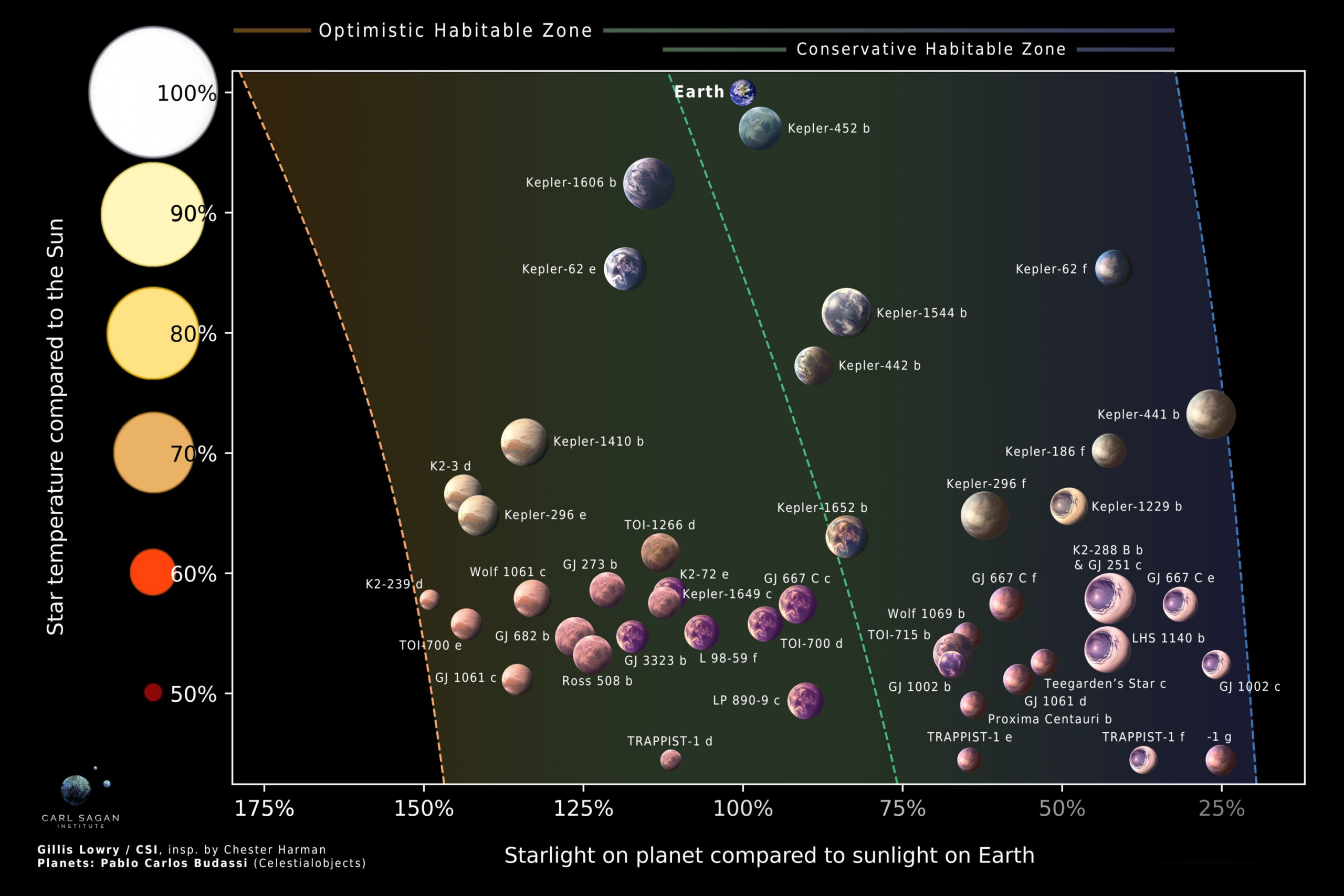
    Among these seven worlds, TRAPPIST-1e and TRAPPIST-1f stand out as the prime candidates for hosting liquid water. Both reside squarely within the star’s habitable zone, sparking intense scientific curiosity and debate about what—or who—might exist on their surfaces.

    The Mystery of the Twilight Terminator

    However, these potential alien worlds are unlike anything we experience in our own solar system. Because they orbit so close to their host M-dwarf star, scientists believe these planets are tidally locked.

    This means one side of the planet permanently faces the searing heat of the star, while the other is trapped in perpetual, freezing darkness. Between these two extreme environments lies a thin, mysterious band known as the twilight terminator, where temperatures could be mild enough to sustain life.

    Could an advanced civilization thrive in this eternal twilight? Researchers are now utilizing cutting-edge computer models to simulate the atmospheric conditions of these unique exoplanets, aiming to solve this profound cosmic mystery.

    Forecasting Alien Weather: A Scientific Breakthrough

    To understand if these worlds are truly habitable, scientists have developed a revolutionary, faster way to forecast alien weather. This breakthrough allows researchers to predict climate patterns and atmospheric circulation on distant worlds with unprecedented speed and accuracy.

    By mapping these alien weather systems, astronomers can better identify potential biosignatures. This search for signs of life closely aligns with the growing global interest in UAP disclosure and NASA’s ongoing mission to find habitable exoplanets in the deep cosmos.

    As telescope technology continues to advance, we are closer than ever to uncovering whether these distant worlds hold the ultimate secret. The atmospheric data from TRAPPIST-1 might soon reveal if we are truly alone in the universe, or if our cosmic neighbors are closer than we think.

    2

  • Scientists Decode ‘Alien Weather’ on Nearby Habitable Worlds

    Scientists Decode ‘Alien Weather’ on Nearby Habitable Worlds

    A Breakthrough in the Search for Extraterrestrial Clim

    For years, astronomers and NASA researchers have turned their telescopes toward the TRAPPIST-1 system. Located just 41 light-years from Earth, this nearby cosmic neighborhood remains one of the most promising locations for finding a real space anomaly or signs of habitable environments.

    Now, astrophysicists have developed a faster way to forecast “alien weather” on these distant exoplanets. This breakthrough could revolutionize how we analyze atmospheric data, bringing us closer than ever to uncovering the secrets of alien worlds.

    The Mystery of the TRAPPIST-1 Habitable Zone

    The TRAPPIST-1 system features seven Earth-sized planets orbiting a dim, red M-dwarf star. Among these, planets TRAPPIST-1e and TRAPPIST-1f sit directly within the star’s coveted habitable zone, making them primary targets for astrobiology research.

    However, these worlds harbor a major climate mystery. Because they orbit so close to their host star, scientists believe both planets are tidally locked, meaning they do not rotate relative to their sun.

    This celestial phenomenon results in a permanent day side and a permanent night side. Between these two extreme halves lies a thin, everlasting twilight band known as the “terminator zone,” where life could theoretically survive.

    Predicting Weather on Tidally Locked Worlds

    This extreme climate setup creates complex atmospheric currents that were previously incredibly difficult and time-consuming to simulate. The new forecasting method allows researchers to model these alien atmospheres in a fraction of the time, bypassing traditional computational bottlenecks.

    By understanding how winds and heat circulate on TRAPPIST-1e and -1f, scientists can better identify potential biosignatures. If an atmosphere is stable enough to distribute heat from the day side to the night side, it increases the chances of liquid water persisting on the surface.

    As advanced observatories continue their sweep of the cosmos, decoding these weather patterns is a critical step forward. This scientific leap brings us closer to answering the ultimate question: are we truly alone, or is life waiting to be discovered just 41 light-years away?

    2

  • The Pentagon’s UAP Button: Tracking UFOs in the Digital Age

    The Pentagon’s UAP Button: Tracking UFOs in the Digital Age

    The Search for Answers Goes Digital

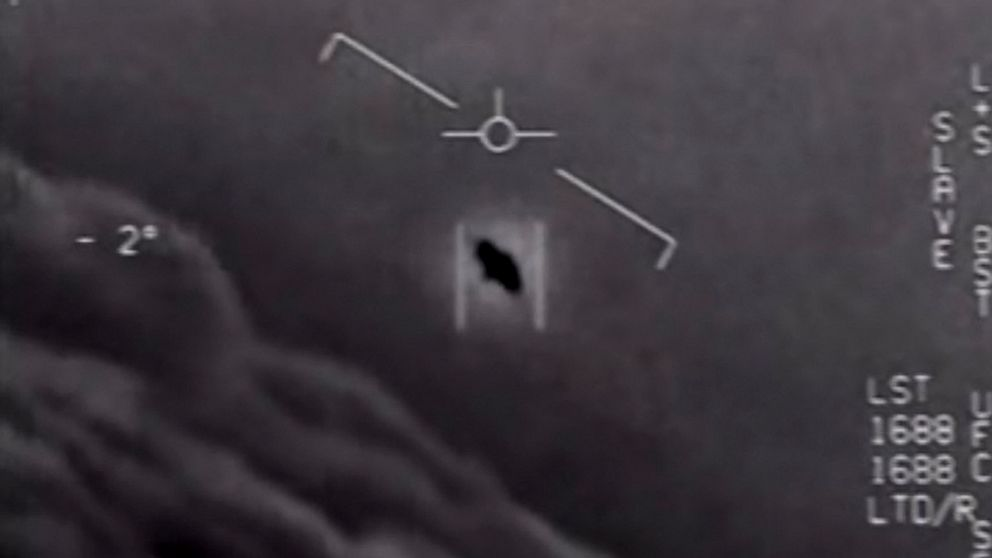
    For decades, the study of unidentified anomalous phenomena (UAPs) was relegated to the fringes of science. Today, the conversation has shifted directly into the halls of government power, sparked by a quiet digital revolution.

    The Pentagon’s All-domain Anomaly Resolution Office (AARO) recently launched a dedicated online reporting mechanism. This official UAP button allows current and former government personnel to report firsthand encounters with unexplained craft.

    This new system aims to centralize reports of anomalous behavior that defy our current understanding of physics. The tool serves as a modern archive for tracking phenomena across space, air, and sea.

    A Portal into the Unknown

    This initiative represents a massive leap forward in government transparency. For the first time, witnesses have a direct pipeline to log observations of high-speed maneuvers and strange transmedium travel.

    Historically, military pilots and radar operators feared professional ruin if they spoke out about a UFO sighting. By offering a secure, officially sanctioned channel, the Pentagon hopes to destigmatize these mysterious encounters.

    The influx of data could finally provide the missing pieces to puzzles that have baffled researchers for generations. Each report is carefully digitized, analyzed, and categorized to detect patterns in global airspace.

    Analyzing the Anomalous Data Stream

    But what happens to these reports once the submission button is pressed? Skeptics and ufologists alike are watching closely as scientists sift through hundreds of military logs.

    While many sightings are quickly identified as weather balloons or advanced commercial drones, a small percentage remain entirely unexplained. These are the genuine mysteries that keep both NASA advisers and intelligence officials searching for answers.

    Could these lingering anomalies represent next-generation foreign technology, or something truly out of this world?

    The Public’s Quest for Disclosure

    Currently, this secure reporting tool is restricted to military and government insiders. However, plans for a public-facing portal are highly anticipated by the global ufology community.

    Access to a verified public archive of UAP sightings could revolutionize our understanding of the skies. As the digital age of tracking advances, every report brings us closer to solving the ultimate cosmic mystery.

    2

  • Mysterious Repeating Radio Signals From Deep Space Defy Explanation

    Mysterious Repeating Radio Signals From Deep Space Defy Explanation

    An Unexplained Cosmic Beat

    Astronomers tracking cosmic anomalies have intercepted a series of highly unusual, repeating radio signals from a distant galaxy. These pulses, known as Fast Radio Bursts (FRBs), are defying traditional astrophysical explanations and sparking intense curiosity worldwide.

    While space is filled with natural cosmic noise, the mathematical precision of these specific signals has led researchers to look closer. Operating like an automated cosmic beacon, the source continues to pulse with a rhythm that seems almost artificial.

    Deciphering the Cosmic Signal

    First discovered in 2007, FRBs are incredibly powerful flashes of radio light that last only milliseconds. Yet, in that fraction of a second, they release as much energy as our Sun does in an entire day.

    What makes this latest discovery so compelling is its repeating nature, flashing on a strict, predictable schedule. This periodic behavior has forced scientists to reconsider what kind of celestial object could generate such precise, recurring bursts of energy.

    Could It Be Alien Technology?

    For decades, researchers at organizations like NASA and various SETI institutes have scanned the skies for anomalous signatures. While most astrophysicists favor natural explanations, such as highly magnetized neutron stars, the sheer consistency of these transmissions keeps the question of extraterrestrial technology open.

    Some theoretical physicists have proposed that these bursts could be the signature of massive power sources used to propel giant light sails across interstellar space. Without definitive proof, the phenomenon remains one of the greatest unsolved mysteries of modern astronomy.

    The Search for Answers Accelerates

    As detection technology improves, global observatories are capturing these signals in real-time, allowing for unprecedented analysis. Every new data point adds another piece to the puzzle, bringing us closer to understanding whether we are witnessing a rare stellar event or something far more profound.

    The hunt for the origin of these deep-space anomalies continues to captivate both mainstream scientists and UAP researchers alike. Until we decode the message, we can only look to the stars and wonder what—or who—is broadcasting across the cosmos.

    2

  • NASA and Pentagon Confront the Mystery of Metallic Sphere UAPs

    NASA and Pentagon Confront the Mystery of Metallic Sphere UAPs

    A Global Phenomenon in Our Skies

    For decades, the debate surrounding unidentified anomalous phenomena (UAPs) and classic UFO sightings has captivated the public. Recently, official investigations have shifted from hushed whispers to rigorous scientific scrutiny, led by agencies like the Pentagon and NASA.

    Among the various sightings documented by military sensors, one specific category of object has emerged as a persistent puzzle. Researchers are increasingly focused on mysterious metallic spheres observed operating across the globe.

    The Search for Answers

    According to reports from the All-domain Anomaly Resolution Office (AARO), these spherical objects exhibit flight characteristics that defy conventional aerodynamics. They often travel at high speeds without any visible means of propulsion or thermal signature.

    While many sightings are eventually resolved as weather balloons or commercial drones, a significant percentage remains classified as an unsolved anomaly. Scientists are working tirelessly to determine if these objects represent advanced foreign technology or something entirely unknown.

    Scientific Scrutiny Meets the Unknown

    The involvement of NASA has brought a new level of academic rigor to the investigation. By utilizing state-of-the-art satellite data and advanced calibration algorithms, researchers hope to track these elusive objects with greater precision.

    The primary goal is not to prove the existence of extraterrestrial life, but to objectively analyze physical data. Every unexplained radar track or high-resolution video clip represents a gap in our current understanding of airspace security and physics.

    A Legacy of Anomalous Encounters

    This is not a modern phenomenon, as military pilots have reported similar encounters dating back to the mid-20th century. However, the integration of artificial intelligence and global sensor networks now allows researchers to analyze these historical cases with unprecedented accuracy.

    The search for clarity continues to bridge the gap between skepticism and wonder. By separating sensationalism from hard data, experts hope to finally solve this enduring global mystery and understand what is truly sharing our skies.

    2

  • The Digital Leak: A Gateway to Hidden UAP Files

    The Digital Leak: A Gateway to Hidden UAP Files


    A bizarre digital anomaly has sent shockwaves through the global UFO research community. A secure government-linked server briefly activated a public RSS feed, exposing what appears to be highly classified military data tracking unexplained aerial phenomena.

    For a few fleeting hours, sharp-eyed web archivers noticed strange coordinate streams and radar sensor logs appearing on the automated feed. This sudden broadcast has sparked intense debate among ufologists and cybersecurity experts, who are scrambling to verify the source.

    What Did the Anomalous Feed Reveal?

    The leaked files contain highly technical descriptions of objects performing seemingly impossible maneuvers. According to the captured data, these UAPs exhibited hypersonic speeds without producing sonic booms or displaying any visible propulsion systems.

    Even more intriguing are the repeated references to “transmedium anomalies” within the logs. These are mysterious crafts capable of transitioning seamlessly between the vacuum of space, Earth’s atmosphere, and the ocean depths without losing velocity.

    Several data points also correlate with historical military encounters, suggesting that the database might hold decades of tracking history. This has led many to believe that the feed was connected to a restricted Pentagon repository.

    Pentagon Silence and Public Speculation

    As news of the digital glitch spread across social media, the host server was abruptly taken offline. Government agencies have yet to release an official statement regarding the source of the data or why it was linked to a public syndication feed.

    While skeptics argue the incident was merely a database testing error containing simulated scenarios, others believe it represents a monumental accidental disclosure. Independent analysts are already working to plot the leaked GPS coordinates to find where these encounters occurred.

    With public interest in the UFO mystery at an all-time high following recent congressional hearings, this digital slip-up raises a critical question. Was this a genuine technical error, or are we slowly being prepared for a paradigm-shifting revelation about what truly shares our airspace?

    2

  • A Cosmic Transmitter in the Deep Dark

    A Cosmic Transmitter in the Deep Dark


    Astronomers have detected a highly unusual, repeating radio signal originating from a distant galaxy. This cosmic anomaly, which behaves like a scheduled transmission, is challenging our current understanding of deep space physics.

    Using state-of-the-art radio telescopes, researchers tracked the signal to a source located billions of light-years away. Unlike typical cosmic noise, this transmission fires with a precise, rhythmic pattern that has sparked intense debate within the scientific community.

    Is It a Natural Phenomenon or Something More?

    While mainstream astrophysicists suggest the source could be a highly magnetized neutron star, others are not so quick to dismiss more extraordinary possibilities. The sheer regularity of the pulses has led some to wonder if we are witnessing an artificial beacon.

    NASA and other international space agencies have continuously monitored these deep space mysteries. Every new data feed provides fresh clues about what is happening in the dark, uncharted corners of our universe.

    Interestingly, the study of these anomalies overlaps with growing government interest in unexplained phenomena. The Pentagon’s ongoing investigation into UAPs (Unidentified Anomalous Phenomena) suggests that both our skies and deep space contain secrets we are only beginning to decipher.

    Decoding the Cosmic Feed

    This latest discovery adds to a growing list of unexplained signals that defy conventional scientific models. Some researchers compare these bursts to a cosmic broadcast, waiting for the right technology to decode its contents.

    The search for extraterrestrial intelligence (SETI) has recently intensified as technology allows us to filter through cosmic noise more efficiently than ever. This newly discovered signal represents a significant milestone in our quest to understand if we are truly alone in the cosmos.

    As advanced satellites prepare to scan the coordinates of the signal once more, the world watches with bated breath. Whether this is a rare stellar remnant or a sign of an advanced intelligence, the mystery remains one of the most compelling of our time.

  • The Dawn of Digital UAP Tracking

    The Dawn of Digital UAP Tracking


    For decades, keeping track of UFO sightings and unexplained cosmic anomalies was a slow, word-of-mouth process. Today, the landscape of ufology has been completely transformed by real-time technology and instant data feeds.

    As agencies like the Pentagon and NASA release once-classified information, researchers no longer have to wait years for paper trials. Automated syndication tools and instant feeds are keeping the global community informed the second a new report drops.

    How Real-Time Data Solves the Mystery

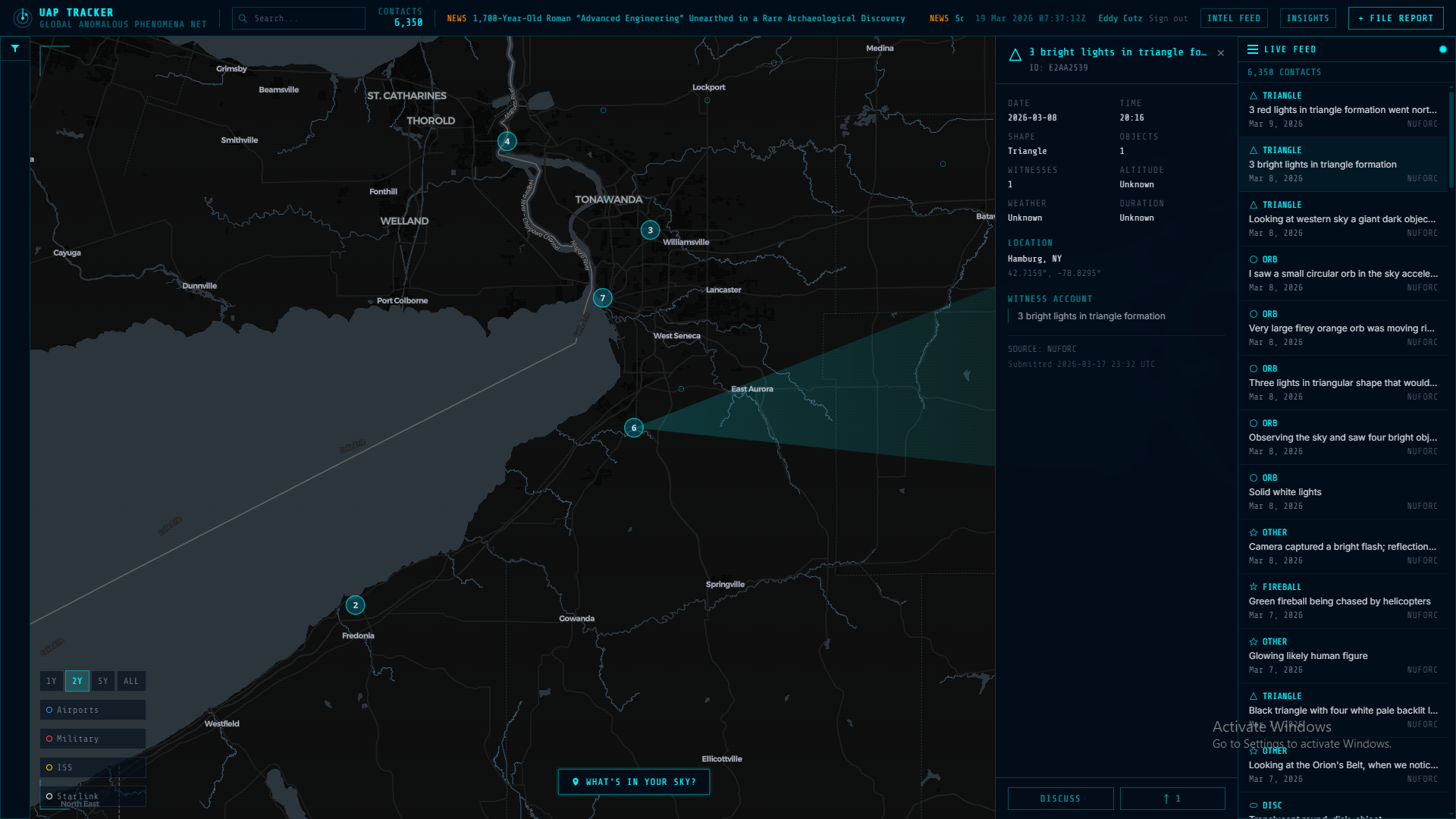
    The modern search for answers relies heavily on speed and data accuracy. By utilizing sophisticated tracking networks and automated digital feeds, enthusiasts can monitor live sky-mapping data as it happens.

    This instant flow of information allows scientists and citizen investigators to instantly cross-reference flight paths and meteorological data. When a strange anomaly is spotted in the night sky, every second counts to determine if we are looking at a drone or something truly unexplained.

    No longer isolated to obscure forums, these technological feeds have democratized the study of UAPs. Serious researchers can now filter out known commercial aircraft in seconds, focusing purely on the high-quality data that defies explanation.

    Connecting Global Databases

    The integration of live RSS feeds and open-source intelligence has bridged the gap between independent researchers and official military databases. Thousands of global sky-watchers are now connected through a single decentralized network of information.

    This massive network ensures that no single sighting goes unrecorded, creating an invaluable database of aerial phenomena. By tracking patterns across continents in real-time, we are closer than ever to understanding the true nature of these mysterious objects.

    A New Era of Transparency

    The shift toward open data has forced official institutions to change how they handle anomalous aerial phenomena. Public pressure, fueled by rapid information sharing, has led to unprecedented congressional hearings and a demand for truth.

    With every automated update and shared report, the gap between official secrecy and public knowledge grows smaller. The next groundbreaking discovery might not come from a classified military lab, but from a real-time alert sent directly to an amateur astronomer’s phone.