The Search for lien Life in TRAPPIST-1
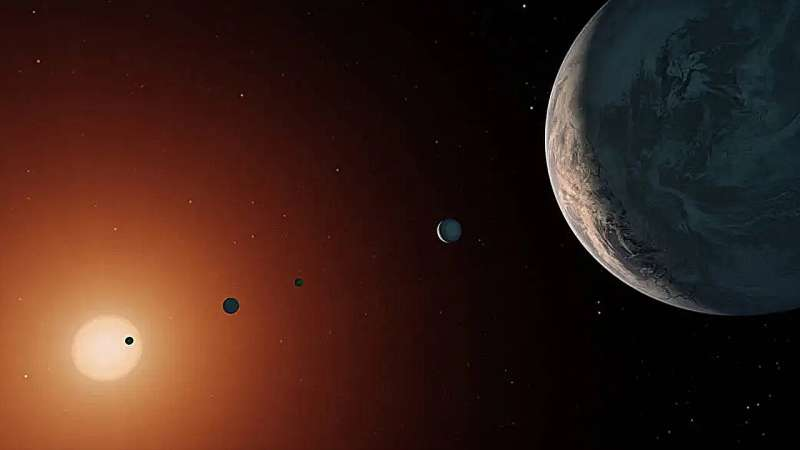
For years, astronomers and space enthusiasts have pointed their telescopes toward the TRAPPIST-1 system. Located just 41 light-years from Earth, this unique stellar neighborhood features seven Earth-sized planets orbiting a dim red dwarf star, creating a massive point of interest for those tracking potential cosmic anomalies.
Among these seven worlds, TRAPPIST-1e and TRAPPIST-1f stand out as the prime candidates for hosting liquid water. Both reside squarely within the star’s habitable zone, sparking intense scientific curiosity and debate about what—or who—might exist on their surfaces.
The Mystery of the Twilight Terminator
However, these potential alien worlds are unlike anything we experience in our own solar system. Because they orbit so close to their host M-dwarf star, scientists believe these planets are tidally locked.
This means one side of the planet permanently faces the searing heat of the star, while the other is trapped in perpetual, freezing darkness. Between these two extreme environments lies a thin, mysterious band known as the twilight terminator, where temperatures could be mild enough to sustain life.
Could an advanced civilization thrive in this eternal twilight? Researchers are now utilizing cutting-edge computer models to simulate the atmospheric conditions of these unique exoplanets, aiming to solve this profound cosmic mystery.
Forecasting Alien Weather: A Scientific Breakthrough
To understand if these worlds are truly habitable, scientists have developed a revolutionary, faster way to forecast alien weather. This breakthrough allows researchers to predict climate patterns and atmospheric circulation on distant worlds with unprecedented speed and accuracy.
By mapping these alien weather systems, astronomers can better identify potential biosignatures. This search for signs of life closely aligns with the growing global interest in UAP disclosure and NASA’s ongoing mission to find habitable exoplanets in the deep cosmos.
As telescope technology continues to advance, we are closer than ever to uncovering whether these distant worlds hold the ultimate secret. The atmospheric data from TRAPPIST-1 might soon reveal if we are truly alone in the universe, or if our cosmic neighbors are closer than we think.
2
Deixe um comentário