The Threat to National Security
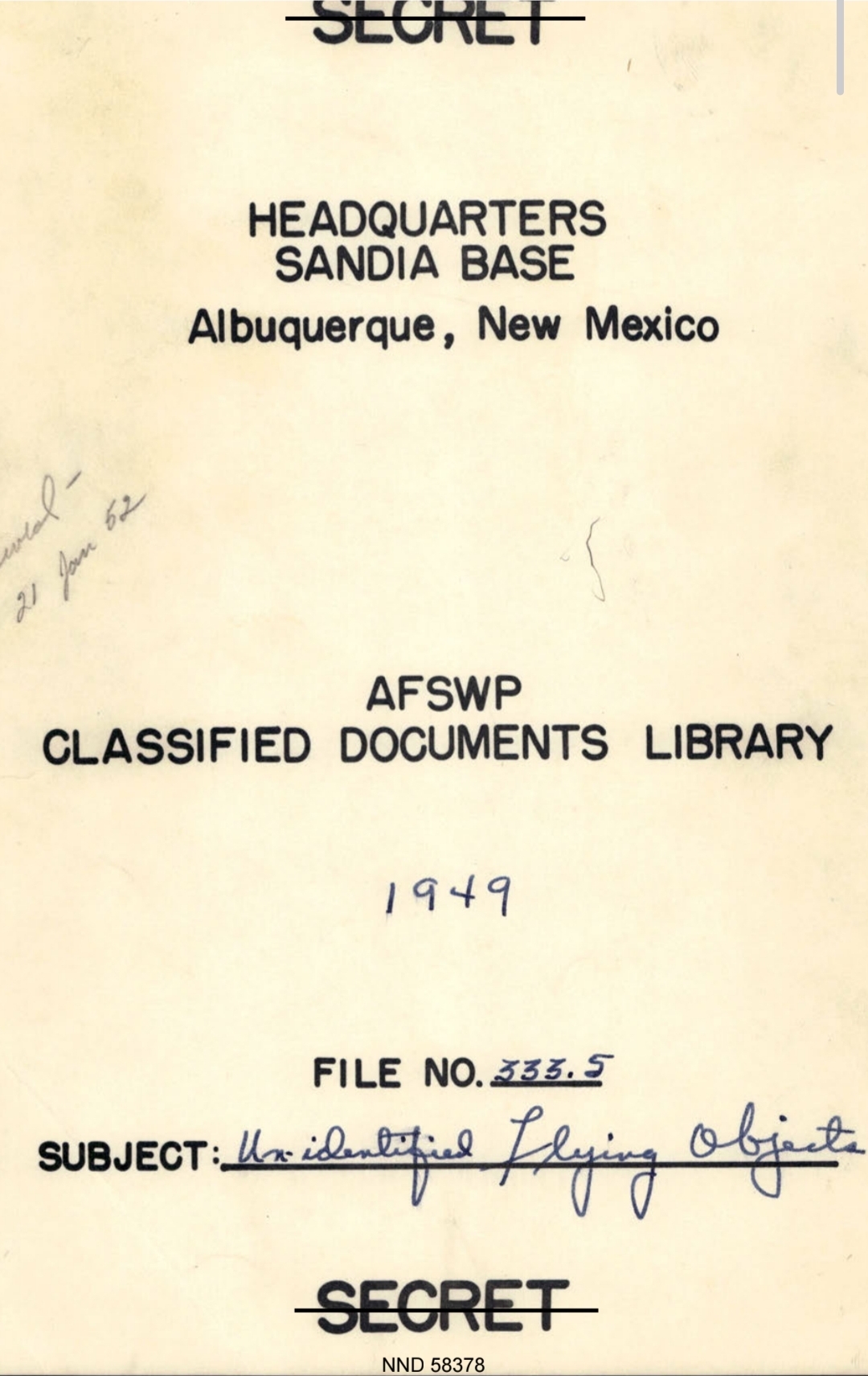
Official military correspondence from 1949 and 1950 highlights a prolonged series of airspace violations over some of the United States’ most critical nuclear installations, including Los Alamos and the Sandia Base in New Mexico. According to wartime records preserved between pages 22 and 28 of the declassified dossier, unidentified anomalous phenomena (UAPs)—specifically described as persistent green fireballs and anomalous blinding lights—maneuvered through restricted airspace continuously for over 18 months, baffling early radar operators and intelligence wings.
The frequency and precise trajectory of these sightings over atomic storage areas triggered immediate alerts across multiple government branches. As detailed in the security logs found between pages 1 and 5 of the document, the military was forced to immediately amend guard orders, lock down strategic access gates, and deploy tactical jeep radios to establish a decentralized perimeter network capable of tracking these high-speed anomalous objects in real-time.
Secret High-Level Conferences
The gravity of the situation led to emergency secret conferences involving top-tier defense organizations. Memorandums found on pages 11, 12, and 15 confirm joint briefings between the Federal Bureau of Investigation (FBI), the Atomic Energy Commission (AEC), the U.S. Air Force, and the Armed Forces Special Weapons Project to assess the potential threat of foreign espionage or unknown technologies.
Military commanders were deeply alarmed by the objects’ apparent interest in nuclear stockpiles and research facilities. While defense scientists scrambled to find a conventional explanation, the consensus among intelligence officers was clear: the unauthorized presence of these objects represented an unresolved threat to national security. These archival records prove that the puzzle sharing our skies is a deeply entrenched challenge that defense agencies have been fighting to understand since the dawn of the nuclear age.
Deixe um comentário