[Cosmic Anomaly: Are Interstellar Visitors Hiding Galactic Mass?,
A New Cosmic Mystery in Our Galactic Backyard
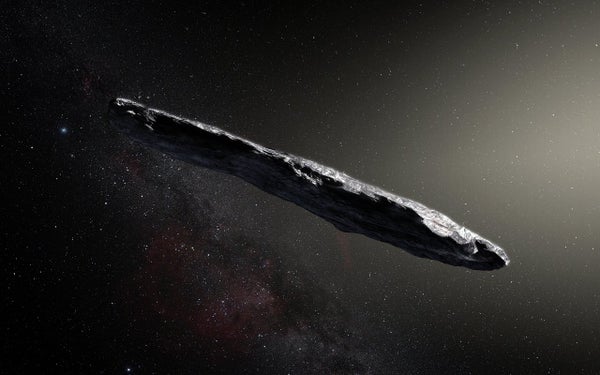
The universe has a way of keeping us on our toes. The recent discovery of 3I/ATLAS, the third confirmed interstellar visitor to enter our solar system, is forcing astronomers to rethink everything we know about deep space anomalies.
But this interstellar object (ISO) isn’t just a wandering space rock. According to a groundbreaking new study, a vast, undetected swarm of these cosmic travelers could solve one of the greatest mysteries in modern astrophysics: the search for dark matter.
Rewriting the Laws of Dark Matter
For decades, researchers at agencies like NASA and scientific institutions worldwide have struggled to explain the “missing mass” of the Milky Way. We know something invisible is holding our galaxy together, traditionally labeled as dark matter.
However, a new preprint paper from researchers at the University of Hamburg suggests a wild alternative. What if the missing mass isn’t some exotic, undiscovered particle, but rather trillions of rogue interstellar comets and debris drifting through the void?
By calculating the potential density of these interstellar objects, the team investigated how a massive population of ISOs would impact our galactic weight calculations. The implications are staggering, suggesting that the dark void of space is far more crowded than we ever imagined.
From Deep Space Anomalies to Earth’s Skies
This discovery bridges the gap between astrophysics and the ongoing hunt for unexplained phenomena. While the Pentagon and UAP tracking initiatives focus on anomalous objects closer to Earth, deep-space discoveries like 3I/ATLAS remind us that the outer cosmos is teeming with uncharted intruders.
Each new interstellar detection brings us closer to a grand disclosure of how planetary systems form, migrate, and shed material into the interstellar medium. If these objects are indeed masking the galaxy’s missing mass, we are looking at a paradigm shift.
Are we on the verge of solving the dark matter anomaly? As telescope technology advances, the line between science fiction and cosmic reality continues to blur, leaving us to wonder what else is hiding in the dark.
2
Deixe um comentário