

Categoria: Uncategorized

  • Beyond Human Technology: Why Pilots and Astronauts Are Breaking Silence on Declassified UAP Encounters

    Beyond Human Technology: Why Pilots and Astronauts Are Breaking Silence on Declassified UAP Encounters

    The Professional Breakthrough: Testing the Boundaries of Conventional Flight

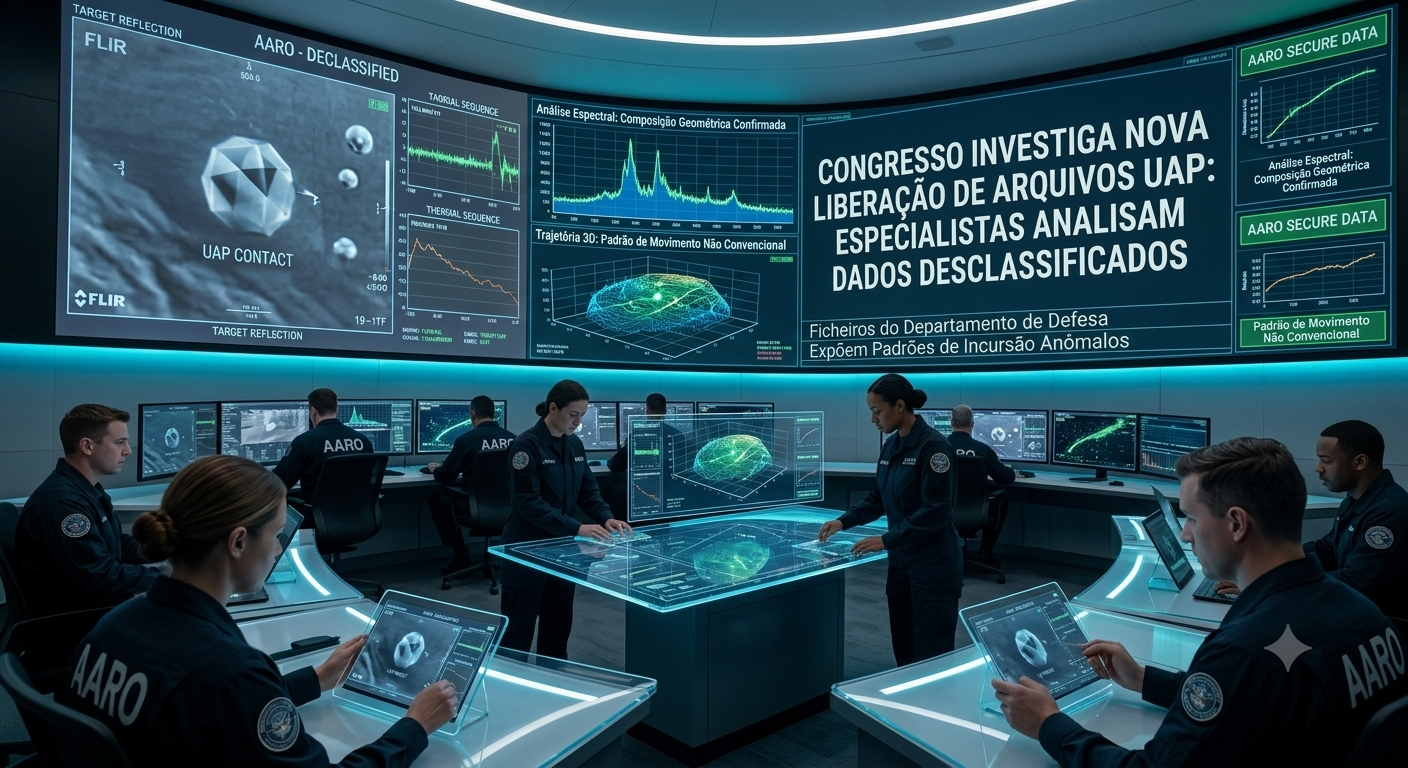
    For decades, the discussion surrounding unidentified flying objects was relegated to the fringes of alternative research and informal sightings. However, a major shift has occurred within the highest echelons of national security, as highly trained tactical pilots, commercial aviators, and veteran astronauts are step-by-step breaking their military silence. Official tracking data and formal declassification efforts from the United States defense apparatus have forced a serious, data-driven evaluation of what the Pentagon officially labels as Unidentified Anomalous Phenomena (UAPs). These are no longer distant anomalies or digital artifacts; they represent physical objects recorded by multi-spectral military sensory networks.

    Naval aviators who operated within active training sectors along the Atlantic coast have detailed persistent encounters with structured craft that exhibited severe aerodynamic advantages. According to declassified mission flight logs, these anomalous structures demonstrated the capability to remain completely stationary against hurricane-force winds, only to suddenly accelerate to hypersonic vectors without producing visible thermal signatures, exhaust plumes, or sonic booms. The extreme consistency of these professional testimonies has officially stripped the UAP subject of its historical taboo, turning it into an urgent issue of **national security risks** and aerospace safety.

    Sensory Corroboration: Why the Testimony of Flight Crews Changes Everything

    What differentiates modern UAP investigations from vintage historical files is the multi-layered grid of verification. The arguments pointing to optical illusions or psychological fatigue among flight crews are no longer sustainable under strict intelligence scrutiny. Current investigations confirm that these encounters are anchored by three critical pillars of evidence:

    • Dual-Sensor Verification: Advanced military pilots have confirmed tracking the exact same physical objects simultaneously through direct visual observation and state-of-the-art radar tracking grids.
    • Defying Known Physics: Witness statements from both commercial and military cockpit operators describe sudden, instantaneous right-angle turns and altitude drops that would physically crush any known human aircraft due to extreme G-force loads.
    • Space Station Anomalies: Even outside Earth’s atmosphere, historical telemetry data from veteran space program operators indicates observations of anomalous maneuvering structures orbiting alongside human spacecraft.

    The structural parameters of these encounters have forced government intelligence committees to admit that our active defense sensors are facing anomalies that completely bypass current aerodynamic manufacturing capabilities. When tactical radar operators and elite pilots are forced to maneuver their multi-million-dollar fighter jets to actively avoid mid-air collisions with unidentified spheres, the operational reality changes from an academic mystery to an immediate defense vulnerability.

    The Geopolitical Implications of Advanced Aerospace Anomalies

    The ongoing disclosure process highlights a deeper, more concerning question for global defense networks. If these advanced, highly coordinated crafts do not belong to the strategic inventory of the United States or its western allies, the possibility of a foreign adversary having achieved such a generational leap in quantum propulsion introduces a massive intelligence shift. However, the total absence of traditional flight control surfaces, such as wings or thrusters, points toward technologies that transcend traditional terrestrial engineering paradigms entirely.

    As intelligence agencies continue to process these declassified files, the necessity for total administrative transparency becomes paramount. This pattern of institutional tracking and containment mirrors other historical incidents where complex data infrastructure faced unexplained blind spots or interference. To understand how automated monitoring systems and tracking operations react during unprecedented mechanical crises, read our deep-dive analysis on the recent NASA Antenna Mishap Involving Deep Space Station 14, showcasing how vulnerabilities in global monitoring networks leave us isolated when critical data feeds go dark.

  • National Security Risk: US Navy Rejects Further Declassification of Classified UAP Videos

    National Security Risk: US Navy Rejects Further Declassification of Classified UAP Videos

    The Boundary of Defense Intelligence Transparency

    The administrative battleground over government disclosure regarding Unidentified Anomalous Phenomena (UAPs) has hit a significant institutional wall. While recent executive guidelines suggested a broader push toward state-level transparency, official verification logs compiled by the civilian archive The Black Vault confirm that defense command channels are actively limiting the release of new sensor telemetry. Following multiple high-level Freedom of Information Act (FOIA) requests tracking military airspace incursions, the United States Department of the Navy formally stated that it will not authorize any further public access to its internal visual databases.

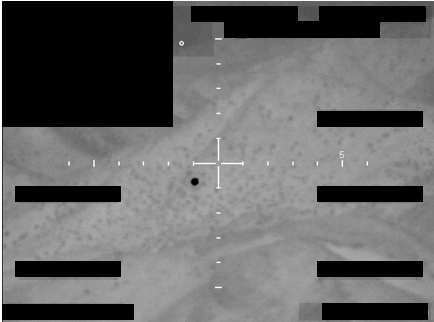
    The structural denial issued by naval intelligence specialists marks a stark departure from the public optimism surrounding modern declassification efforts. According to the formal text of the rejection notices, the military apparatus acknowledges the existence of extensive unreleased footage, tactical photo arrays, and sophisticated multi-sensor tracking metrics. However, defense officials argue that moving these files into the public domain would provide foreign adversaries with highly critical insight into current electronic warfare protocols.

    Sensors, Capabilities, and the National Security Standard

    The core justification for withholding additional UAP intelligence centers entirely on the technological sensitivity of current defense platforms. Naval authorities clarify that the raw files are captured by frontline assets operating within tightly controlled training sectors and strategic naval corridors. Intelligence units have outlined specific operational parameters that prevent further unsealing of these records:

    • Vulnerability Exposure: Raw video assets can inadvertently reveal the exact detection ranges, tracking speeds, and infrared limits of advanced fighter jet sensor suites.
    • Tactical Triangulation: Unedited telemetry logs allow external military analysts to calculate secret naval maneuvering zones and fleet deployment layouts.
    • Proprietary Codecs: Digital processing methods utilized to stabilize anomalous radar captures remain tied to top-secret defense communications networks.

    As a direct consequence of these strict security assessments, the Department of Defense maintains that even if the observed airborne objects remain classified as “unidentified,” the physical metadata surrounding the encounters is fundamentally tied to national survival protocols. This creates a challenging paradox for independent research organizations, where the scientific data needed to evaluate anomalous flight dynamics is locked away behind the very systems designed to guard federal airspace borders.

    The Conflict Between Scientific Inquiry and State Secrets

    The dynamic interaction between decentralized civilian investigators and the military enterprise highlights a widening gap in the modern UAP discourse. While legislative bodies continue to push for updated reporting frameworks through agencies like the All-domain Anomaly Resolution Office (AARO), the navy’s definitive stance proves that national defense priorities will consistently override public transparency initiatives. This systemic containment strategy limits global engineering groups from cross-referencing multi-spectral files that could help resolve complex physics anomalies.

    The current institutional freeze ensures that civilian-led digital directories remain the primary tool for trackable transparency. Despite intense bureaucratic blockages and aggressive redaction policies that erase vital coordinates from unsealed files, the continuous monitoring of federal archives ensures that authentic encounter patterns are not entirely scanned from history. By focusing heavily on the physical mechanisms of data collection, the research community continues to challenge official defense barriers, proving that the search for definitive answers requires uncovering the raw tracking infrastructure hiding beneath layers of state secrecy.

  • The FOIA Legacy: How Declassified Archives Are Exposing Decades of Military UAP Secrets

    The FOIA Legacy: How Declassified Archives Are Exposing Decades of Military UAP Secrets

    The Power of Freedom of Information Acts in Modern Uap Science

    Government transparency regarding Unidentified Anomalous Phenomena (UAPs) has historical underpinnings heavily reliant on investigative efforts outside official military communication branches. Over the years, decentralized historical research centers and civilian-led databases have leveraged the Freedom of Information Act (FOIA) to systematically unseal critical military files, diplomatic cables, and operational tracking maps that defense intelligence groups initially intended to keep classified indefinitely.

    The processing of these extensive historical archives has revealed that behind closed doors, various branches of federal law enforcement, defense sectors, and international monitoring wings have systematically cataloged anomalous aerospace incursions for several generations. By utilizing FOIA channels to bypass standard top-secret classification walls, modern civilian databases are building an unedited baseline of raw evidence, forcing a massive shift from traditional government denial to a systematic public evaluation of aerospace anomalies.

    Declassified Intelligence: From NASA Meetings to Law Enforcement Interceptions

    The ongoing digitization of newly unsealed dossiers provides an unprecedented look into tactical emergencies handled by joint intelligence forces. Historical records highlight high-level coordination meetings conducted between NASA specialists and tactical tracking teams, alongside multi-sensor security reports outlining strange low-altitude encounters. For instance, specific declassified logs detail field events where law enforcement agents and military operators monitored highly luminous orbs and silent structural crafts performing maneuvers that entirely contradicted standard aerodynamic physics.

    Furthermore, these archival releases contain multi-layered intelligence logs, including state-level diplomatic cables tracking strange aerial occurrences across regions like Europe, Latin America, and remote sectors in Papua New Guinea. Defense specialists analyzing these newly public records note that the documents contain structural descriptions, sensory cross-correlations, and precise geolocation parameters. This open-source data allows civilian research groups to run algorithmic trends and locational analyses without the institutional constraints typically imposed by defense wings or official investigative offices like the All-domain Anomaly Resolution Office (AARO).

    Combating Over-Classification and Securing Open Data

    The systematic release of historical records continues to face severe administrative barriers within the defense infrastructure. Civilian archival platforms frequently experience persistent resistance from military departments, with significant segments of video footage, radar graphs, and sensor metrics being heavily redacted or entirely withheld under the pretext of protecting national security protocols or proprietary detection technologies. These continuous blockages have sparked heated debates among lawmakers and transparency advocates who push for comprehensive declassification mandates.

    The critical importance of preserving these decentralized, unedited civilian databases became glaringly evident during recent structural audits, which noted that external digital interferences and security anomalies had temporarily compromised centralized data servers hosting thousands of unsealed files. Despite these systemic challenges, the persistent push to unearth and protect authentic historical files ensures that independent researchers possess the exact scientific parameters needed to study unknown technologies. By shifting the custody of data from closed military vaults to open public directories, the global research community is establishing a transparent framework where empirical analysis, rather than state-sanctioned narratives, will ultimately solve the UAP puzzle.

  • Pentagon Launches Massive Declassification: Public Urged to Decide on New UAP Document Releases

    Pentagon Launches Massive Declassification: Public Urged to Decide on New UAP Document Releases

    A Historic Shift in Military Transparency

    In an unprecedented turn of events for defense intelligence, the Pentagon has officially begun the systematic release of previously classified files documenting Unidentified Anomalous Phenomena (UAPs). Spearheaded by a coordinated interagency effort involving the White House, the Director of National Intelligence, the Department of Energy, NASA, and the FBI, this historic move signalizes a major shift in how the federal government handles reports of unexplained aerial incursions. According to official defense briefs, additional documents will now be released to the public on a rolling basis every few weeks as part of the newly implemented Presidential Unsealing and Reporting System for UAP Encounters (PURSUE).

    The strategic deployment of these archival materials marks a deliberate departure from the standard operating procedures of past defense intelligence wings. In an unexpected public announcement, Pentagon officials stated that while past administrations actively sought to discredit or dissuade the American public regarding UAP reports, the current directive is explicitly focused on providing maximum transparency to the public, allowing citizens to ultimately study the evidence and make up their own minds about the information contained within these files.

    Inside the Declassified Tranches: From FBI Logs to Diplomatic Cables

    The initial release consists of a multi-layered digital database hosting over 160 distinct files, including 120 complex PDF dossiers, 28 high-definition military sensor videos, and 14 raw photographic assets. Military intelligence specialists note that the current batch contains eyewitness testimony, tactical photo arrays, and detailed anomalous encounter logs from around the globe, spanning several decades of active service reports up to late 2025. Among the most striking inclusions are historical astronaut debrief transcripts and State Department diplomatic cables detailing mysterious UAP tracking events over countries like Papua New Guinea, Mexico, and Georgia.

    For research groups tracking active military sectors, one specific declassified document highlights a 2023 field operation in the western United States. The official file details how multiple federal law enforcement agents witnessed several highly luminous orbs and strange structural figures performing advanced low-altitude maneuvers just off the ground. While defense experts and aerospace technicians urge caution—warning that complex military hardware or thermal signatures can easily be misinterpreted by untrained observers—the sheer volume of unedited documentation offers a massive baseline for civilian scientific groups to analyze propulsion, radiation, and structural patterns without prior constraints.

    The Evolution of Federal Tracking Standards

    The institutional framework for this massive public release has been developing behind closed doors for several years. Following a mandate issued by Congress in 2022, defense sectors established dedicated channels to track, review, and declassify material related to unexplained military airspace violations. While a comprehensive historical report published in 2024 by defense investigators concluded that no official government investigation had yet found definitive physical proof of alien technology or extraterrestrial life, a dedicated group of lawmakers has continued to press for full exposure, alleging that key tracking data was being withheld from public view.

    As the All-domain Anomaly Resolution Office (AARO) and partner agencies proceed to push out upcoming tranches of records, the ongoing declassification highlights a crucial turning point for the modern study of anomalous physics. By shifting from top-secret denial to an open rolling archive, the Pentagon is leaving the ultimate resolution of the UAP puzzle in the hands of global researchers, creating a massive wave of independent data analysis that will inevitably redefine our understanding of aerospace security and unknown technologies in our skies.

  • The Outer Space Treaty Was Designed for the Cold War—Researchers Say It Can’t Handle What’s Coming Next

    The Outer Space Treaty Was Designed for the Cold War—Researchers Say It Can’t Handle What’s Coming Next

    Cold War Space Treaty Is Breaking: Who Will Control Near-Earth Orbit?,

    An Ancient Law for a Modern Cosmic Frontier

    The foundation of global space law, which has successfully governed human activities beyond Earth for nearly sixty years, is rapidly approaching a critical breaking point. According to a groundbreaking new analysis, the legal framework crafted during the height of the Cold War is completely unprepared for the impending era of commercial spaceflight and military orbit control.

    Published in the prestigious journal Frontiers in Space Technologies, the study warns that the historic 1967 Outer Space Treaty (OST) faces unprecedented threats. Between rising geopolitical rivalries on Earth and the sudden dominance of private aerospace corporations, the rules of outer space are being rewritten in real-time.

    Astronomers Dr. John Barentine and Dr. Aparna Venkatesan argue that while the treaty was a triumph of its era, it cannot withstand the modern space race. As NASA, the Pentagon, and international adversaries turn their attention to the stars, the potential for unresolved conflict in near-Earth orbit has never been higher.

    Born in the Shadow of the Cold War

    The Outer Space Treaty was forged during one of the most dangerous periods in modern human history. Negotiated primarily by the United States and the Soviet Union, the document established vital boundaries for humanity’s expansion into the cosmos.

    Among its most crucial tenets were strict bans on placing weapons of mass destruction in orbit and the prohibition of national sovereignty claims over celestial bodies. For decades, this historic agreement successfully prevented a catastrophic orbital arms race.

    However, the researchers point out that the treaty was designed for an era when only two superpowers possessed launch capabilities. Today, dozens of nations operate advanced satellites, and private entities are launching rockets at a rate never before imagined, leaving major legal and moral questions unresolved.

    The Threat of Orbital Militarization and Classified Anomalies

    The study highlights a sobering reality: space exploration and military dominance have always been deeply intertwined. From the V-2 rockets of World War II to the launch of Sputnik in 1957, scientific achievements in space have often doubled as military demonstrations.

    In recent years, the militarization of orbit has accelerated dramatically. Global powers like the United States, China, Russia, and India are investing heavily in anti-satellite weapons, advanced missile-defense architectures, and highly classified orbital assets.

    For organizations monitoring the skies, this surge in military traffic creates a complex web of secrecy. With thousands of new satellites and secret payloads in orbit, distinguishing between classified military tech, space debris, and genuine UAP anomalies has become a daunting challenge for both NASA and independent researchers looking for the next orbital mystery.

    A Looming Lunar Land Grab?

    Perhaps the most urgent warning in the study concerns the Moon, which is quickly becoming a primary geopolitical flashpoint. With multiple nations successfully landing spacecraft on the lunar surface, plans for permanent bases and resource extraction are rapidly moving from science fiction to reality.

    Because the Outer Space Treaty bans sovereignty claims but fails to address resource ownership or “exclusion zones,” the first nations to establish a presence could effectively monopolize the most valuable areas. This loophole risks igniting a dangerous rush for lunar territory, despite the treaty’s cooperative spirit.

    Furthermore, the threat of orbital debris looms large over all space-faring nations. Destructive kinetic actions or satellite collisions in orbit can generate thousands of fragments that persist for decades, threatening spacecraft, scientific missions, and tracking operations worldwide.

    Treating Space as a Protected Environment

    Rather than calling for the complete abandonment of the Outer Space Treaty, the researchers advocate for a profound shift in how we view the cosmos. They suggest drawing inspiration from the global “Rights of Nature” movement, which views ecosystems as having intrinsic rights to exist and thrive.

    By treating near-Earth orbit and celestial bodies as environments deserving of stewardship rather than resources to be exploited, humanity might avoid repeating the ecological mistakes made on Earth. Models of international cooperation, such as the peaceful management of Antarctica, could provide a blueprint for the future.

    “The fundamental challenge lies in defending the space environment from failure of human goodwill and trust,” the authors conclude. As disclosure efforts continue and the mystery of what lies beyond our atmosphere deepens, establishing clear, cooperative rules for the cosmos has never been more vital.

    Image Suggestion: A dramatic, cinematic digital art piece showing the Earth from orbit, surrounded by a dense network of glowing satellites and a futuristic military spacecraft patrolling the edge of space, with the Moon visible in the background under a starry, mysterious cosmos.


  • The March 1949 Incursions: Multiple Military Patrols Confirm Interacting Unidentified Lights

    The March 1949 Incursions: Multiple Military Patrols Confirm Interacting Unidentified Lights

    Tactical Sightings in Restricted Airspace

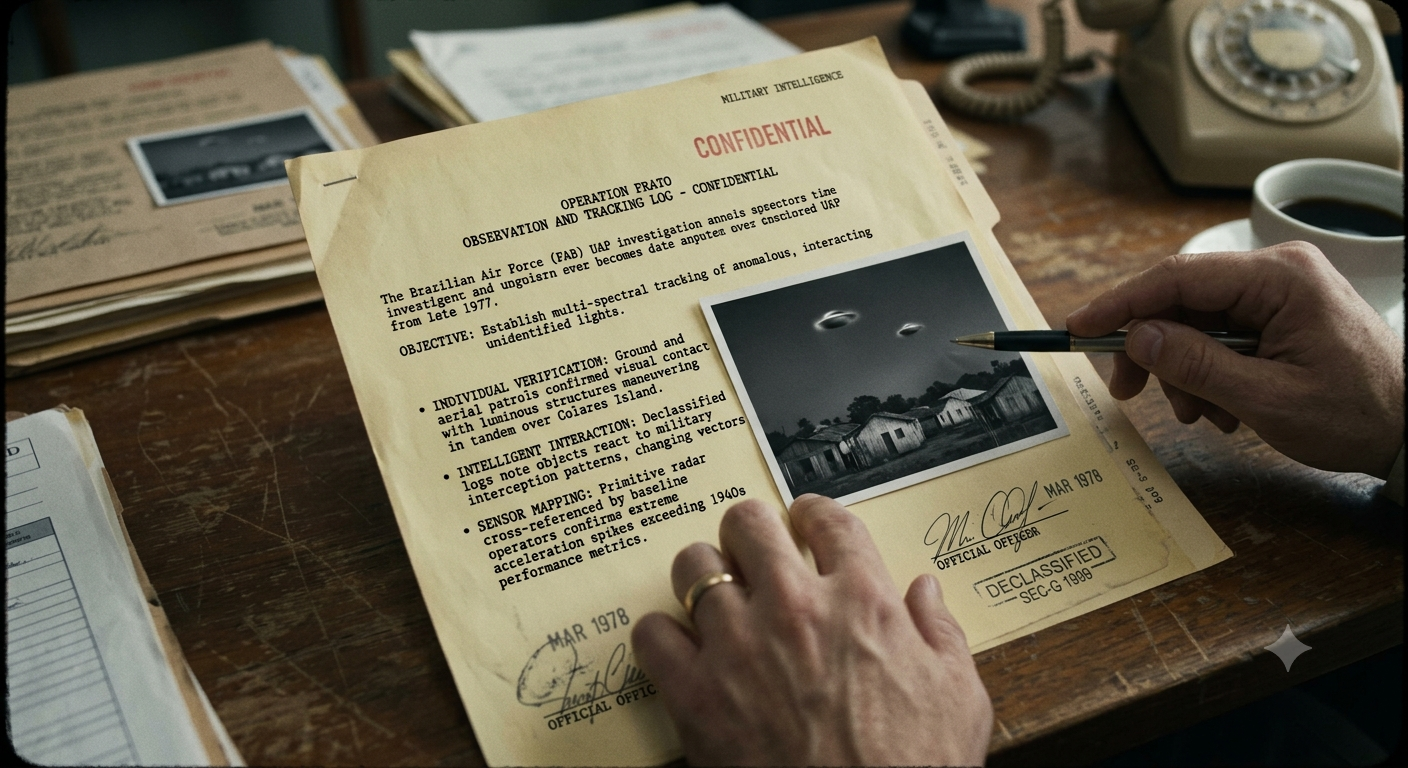
    Declassified military intelligence records from March 1949 reveal a series of highly coordinated aerial violations over tactical zones that deeply challenged the defense capabilities of the United States armed forces. According to detailed observation logs and encounter summaries preserved between pages 95 and 102 of the Sandia official intelligence archive, multiple independent military units deployed on active guard duty simultaneously intercepted a group of unidentified anomalous phenomena (UAPs) operating with absolute impunity inside highly restricted federal sectors.

    The tactical chronologies detailed in these operational files indicate that the events reached a critical peak during the first week of March 1949. Ground observers stationed across defense lines reported a formation of structured lights moving in unusual patterns. The group consisted of three brilliant amber-yellow lights and one distinct red light flying in a tightly synchronized formation. According to the defensive radar tracking summaries and physical coordinate logs found specifically on page 97, these objects did not follow any known ballistic trajectory, commercial flight plan, or meteorological pattern, immediately triggering a high-level security alert across the entire installation command.

    Synchronized Military Eye-Witness Testimony

    Unlike isolated civilian accounts that dominated early ufology archives, this specific defense emergency was documented by trained, on-duty military specialists. Security logs found on pages 98 and 99 confirm that a tactical unit patrolling “Area Q”—a zone dedicated to sensitive military projects—and a specialized four-man alert squad stationed permanently on the high-altitude Greenville Mountain ridge confirmed seeing the exact same phenomena at the exact same moments. The soldiers described the anomalous lights not merely as drifting elements, but as objects performing intelligent, interacting maneuvers, including sudden stops, rapid acceleration pulses, and sharp angular turns that defy conventional aerodynamic capabilities.

    The field reports written by the commanding officers on the ground emphasize that weather conditions during the nights of March 6, 7, and 8 were completely clear, with excellent visibility and minimal wind interference. As noted in the official weather calibration charts attached to the final section of the file on pages 105 and 106, this data effectively ruled out thermal inversions, cloud reflections, or standard atmospheric anomalies. The four soldiers from the Greenville Mountain alert post provided individual, matching descriptions of the red object separating from the amber cluster, performing a low-altitude sweep near the military perimeter fence line, and then instantly climbing vertically until it disappeared into the upper atmosphere.

    The Failure of Conventional Explanations

    Immediately following these synchronized observations, intelligence officers from the Office of Special Investigations (OSI) and ground security elements launched a rigorous investigation to locate any physical trace of conventional operations in the area. Ground sweeps, civilian airport cross-checks, and commercial logistics reviews were conducted across the region. However, as the consolidated investigation report on page 101 strictly details, authorities failed to discover any record of private aviation, unauthorized military exercises, experimental weather balloon launches, or pyrotechnic testing that could account for the lights.

    The sheer precision of the simultaneous sightings by geographically separated military patrols eliminated the possibility of optical illusions or localized hallucinations. Military specialists noted that the silent operation of the craft—which produced no audible propulsion sound or sonic booms despite moving at seemingly hypersonic velocities—indicated a technological paradigm completely detached from the known aviation engineering of the late 1940s. The documents prove that the intelligence wing was dealing with real, physical intrusions that easily bypassed the active defensive barriers established to protect national security assets.

    Systemic Archives and the Modern UAP Puzzle

    The historical significance of the March 1949 incursions lies in the systemic approach the military used to catalogue these events. The final pages of the declassified dossier, specifically pages 107 through 109, contain original hand-drawn tactical maps, triangulation charts, and ray-line graphs indicating the exact angles of observation from Camp Hood, Texas, to the central operational grid of the objects. These visual assets illustrate that defense agencies were treating UAPs as a highly serious tracking problem, using scientific methods to analyze altitude, speed, and behavior patterns decades before the modern implementation of digital sensor networks.

    These archival records show that the core questions surrounding unidentified anomalous phenomena have remained unchanged for generations. The detailed observations of interacting lights over tactical perimeters in 1949 perfectly parallel modern military encounters reported by naval aviators and tracked by the Pentagon’s All-domain Anomaly Resolution Office (AARO) today. By providing readers with the exact page numbers and technical criteria used by researchers in 1949, this documentation bridges the gap between historical secrecy and modern disclosure, offering undeniable evidence that our skies have been shared with unknown technologies for much longer than officially acknowledged.

  • Sensitive Nuclear Sites Under Watch: The 18-Month UAP Incursion Over Los Alamos and Sandia Base

    Sensitive Nuclear Sites Under Watch: The 18-Month UAP Incursion Over Los Alamos and Sandia Base

    The Threat to National Security

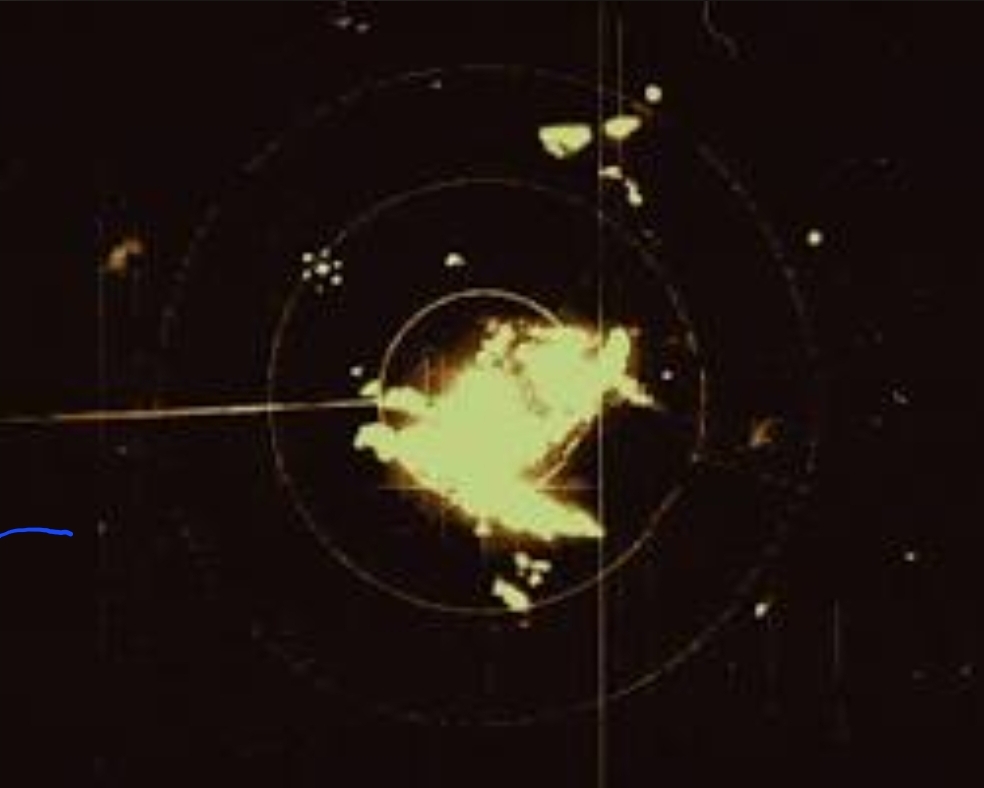
    Official military correspondence from 1949 and 1950 highlights a prolonged series of airspace violations over some of the United States’ most critical nuclear installations, including Los Alamos and the Sandia Base in New Mexico. According to wartime records preserved between pages 22 and 28 of the declassified dossier, unidentified anomalous phenomena (UAPs)—specifically described as persistent green fireballs and anomalous blinding lights—maneuvered through restricted airspace continuously for over 18 months, baffling early radar operators and intelligence wings.

    The frequency and precise trajectory of these sightings over atomic storage areas triggered immediate alerts across multiple government branches. As detailed in the security logs found between pages 1 and 5 of the document, the military was forced to immediately amend guard orders, lock down strategic access gates, and deploy tactical jeep radios to establish a decentralized perimeter network capable of tracking these high-speed anomalous objects in real-time.

    Secret High-Level Conferences

    The gravity of the situation led to emergency secret conferences involving top-tier defense organizations. Memorandums found on pages 11, 12, and 15 confirm joint briefings between the Federal Bureau of Investigation (FBI), the Atomic Energy Commission (AEC), the U.S. Air Force, and the Armed Forces Special Weapons Project to assess the potential threat of foreign espionage or unknown technologies.

    Military commanders were deeply alarmed by the objects’ apparent interest in nuclear stockpiles and research facilities. While defense scientists scrambled to find a conventional explanation, the consensus among intelligence officers was clear: the unauthorized presence of these objects represented an unresolved threat to national security. These archival records prove that the puzzle sharing our skies is a deeply entrenched challenge that defense agencies have been fighting to understand since the dawn of the nuclear age.

  • Mysterious signals keep coming from space: Astronomers find their ‘Rosetta stone’

    Mysterious signals keep coming from space: Astronomers find their ‘Rosetta stone’


     Mysterious Deep Space Signals: Astronomers Decode New Cosmic Anomaly, 

    A New Era in the Search for Cosmic Answers

    For decades, the cosmos has teased humanity with fleeting whispers. Mysterious radio signals, flashing from the deepest corners of the universe, have long fueled speculation about extraterrestrial intelligence and advanced alien civilizations.

    Now, scientists believe they have stumbled upon a celestial “Rosetta stone.” This breakthrough discovery could finally explain one of the most baffling anomalies in modern astrophysics.

    Astronomers have traced a persistent, repeating radio signal back to its source. The culprit behind this fascinating transmission is a highly unusual pair of stars locked in a cosmic dance, spiraling around each other in deep space.

    Unveiling ASKAP J1745: The Source of the Signal

    The newly identified cosmic transmitter, designated as ASKAP J1745, was detected using cutting-edge radio telescope arrays. Unlike one-off fast radio bursts (FRBs) that vanish in milliseconds, this anomaly continues to pulse with strange regularity.

    This repeating pattern immediately caught the attention of researchers worldwide. For UAP (Unidentified Aerial Phenomena) enthusiasts and mainstream astronomers alike, highly structured signals from deep space always raise the ultimate question: is it a natural phenomenon, or something more?

    The discovery of ASKAP J1745 provides a definitive, albeit astonishing, scientific answer. It offers a rare glimpse into the extreme physics operating in the far reaches of our galaxy.

    The Deadly Spiral of Two Star Companions

    At the heart of this deep-space anomaly lies a binary star system. Two massive stars are locked in a tight gravitational embrace, spiraling closer and closer to one another.

    As these celestial bodies orbit at breakneck speeds, their intense magnetic fields and solar winds collide. This violent interaction acts as a massive cosmic generator, blasting intense beams of radio waves across the universe.

    This mechanical-like regularity is what made the signal appear so artificial at first. The spiraling motion creates a lighthouse effect, sweeping across Earth’s path at predictable intervals and mimicking the patterns of a deliberate beacon.

    Why This Discovery Matters for the UAP and SETI Communities

    For those tracking UAP sightings and searching for signs of advanced technology (SETI), this discovery is a double-edged sword. While it explains away one cosmic mystery as a natural occurrence, it provides crucial data for future searches.

    By understanding what a natural, highly structured cosmic signal looks like, scientists can better calibrate their search for true technosignatures. Agencies like NASA and various military disclosure initiatives rely heavily on filtering out this cosmic “static” to identify genuine anomalies.

    If we are to ever detect a signal from an intelligent extraterrestrial source, we must first master the language of the stars. ASKAP J1745 represents a major leap forward in that exact mission.

    The Ongoing Quest to Decode the Universe

    Despite this breakthrough, many questions remain unanswered. How many of the thousands of unexplained signals detected by NASA and international observatories each year are actually binary stars, and how many remain truly anomalous?

    As radio astronomy technology advances, our ability to peer into the dark improves. Every decoded signal brings us one step closer to understanding the grand design of the cosmos.

    Whether these discoveries point to natural wonders or pave the way for future contact, one thing is certain: the universe is far from silent.

    Are We Closer to Disclosure?

    The study of deep-space anomalies often intersects with the ongoing push for government and military disclosure regarding UAPs. By analyzing these extreme outer space phenomena, researchers gain a clearer picture of what is possible within the laws of physics.

    As we continue to monitor the heavens, the line between science fiction and scientific reality grows thinner. The “Rosetta stone” of ASKAP J1745 may just be the beginning of a much larger cosmic revelation.

  • Real-Time UFO Tracking: The Digital Feeds Changing UAP Science

    Real-Time UFO Tracking: The Digital Feeds Changing UAP Science


    The New Era of Live UAP Tracking

    For decades, keeping track of mysterious sky anomalies was a slow, frustrating game of waiting for official government reports. Today, a digital revolution is quietly taking place, allowing citizen scientists to monitor UFO and UAP activity in real-time.

    Using advanced satellite tracking, open-source data feeds, and instant notification systems, researchers are no longer dependent on declassified documents. Instead, live digital networks are mapping the skies, flagging unusual movements as they happen.

    Crowdsourcing the Search for Anomalies

    The concept of a real-time feed for tracking anomalous phenomena has transformed from a sci-fi dream into a concrete tool. Tech-savvy civilian groups are now utilizing complex database feeds to aggregate global sightings instantly.

    These specialized platforms operate much like high-tech news feeds, constantly updating with radar anomalies, military airspace reports, and satellite imagery. When an unexplained object crosses the sky, notifications are sent to researchers worldwide within seconds.

    This decentralized approach has forced agencies like NASA and the Pentagon to take public data collection more seriously. The sheer volume of instantly shared digital evidence makes unexplained aerial anomalies harder to dismiss.

    Why Real-Time Data is Changing Everything

    In the past, the main obstacle to solving the UFO mystery was the lack of verifiable, immediate data. By the time a witness reported an encounter, the object was long gone, leaving behind only subjective memories.

    Now, live feeds allow multiple observers to cross-reference a single event using different sensors simultaneously. If a strange light appears in Europe, automated tracking systems can immediately check flight paths, weather balloons, and satellite orbits.

    This systematic filtering process separates known objects from genuine, unexplained UAPs in a matter of minutes. It represents a massive leap forward in scientific accountability and rigor.

    The Future of Sky Monitoring

    As AI-powered tracking tools and public databases continue to evolve, the curtain of secrecy surrounding sky anomalies is wearing thin. The next major UAP discovery might not come from a classified military briefing, but from a public alert system.

    With global communities connected through these high-speed digital networks, the skies have never been watched so closely. The ultimate truth behind these mysteries might finally be just a click away.

    2

  • Could the Milky Way’s missing mass be hiding in a swarm of interstellar comets?

    Could the Milky Way’s missing mass be hiding in a swarm of interstellar comets?


    [Cosmic Anomaly: Are Interstellar Visitors Hiding Galactic Mass?,

    A New Cosmic Mystery in Our Galactic Backyard

    The universe has a way of keeping us on our toes. The recent discovery of 3I/ATLAS, the third confirmed interstellar visitor to enter our solar system, is forcing astronomers to rethink everything we know about deep space anomalies.

    But this interstellar object (ISO) isn’t just a wandering space rock. According to a groundbreaking new study, a vast, undetected swarm of these cosmic travelers could solve one of the greatest mysteries in modern astrophysics: the search for dark matter.

    Rewriting the Laws of Dark Matter

    For decades, researchers at agencies like NASA and scientific institutions worldwide have struggled to explain the “missing mass” of the Milky Way. We know something invisible is holding our galaxy together, traditionally labeled as dark matter.

    However, a new preprint paper from researchers at the University of Hamburg suggests a wild alternative. What if the missing mass isn’t some exotic, undiscovered particle, but rather trillions of rogue interstellar comets and debris drifting through the void?

    By calculating the potential density of these interstellar objects, the team investigated how a massive population of ISOs would impact our galactic weight calculations. The implications are staggering, suggesting that the dark void of space is far more crowded than we ever imagined.

    From Deep Space Anomalies to Earth’s Skies

    This discovery bridges the gap between astrophysics and the ongoing hunt for unexplained phenomena. While the Pentagon and UAP tracking initiatives focus on anomalous objects closer to Earth, deep-space discoveries like 3I/ATLAS remind us that the outer cosmos is teeming with uncharted intruders.

    Each new interstellar detection brings us closer to a grand disclosure of how planetary systems form, migrate, and shed material into the interstellar medium. If these objects are indeed masking the galaxy’s missing mass, we are looking at a paradigm shift.

    Are we on the verge of solving the dark matter anomaly? As telescope technology advances, the line between science fiction and cosmic reality continues to blur, leaving us to wonder what else is hiding in the dark.

    2