The Varginha UFO Incident: Why Lawmakers Launch a Declassification Campaign for Classified UFO Files
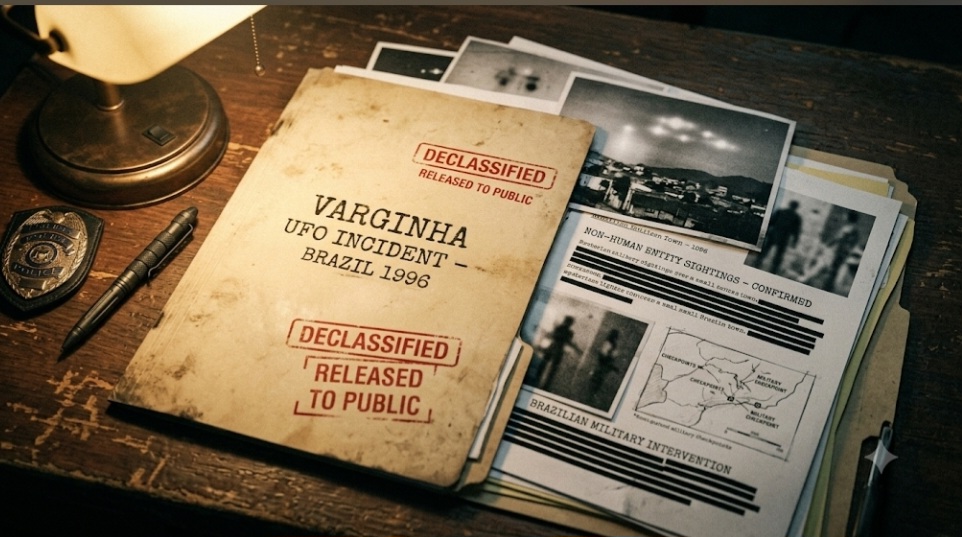
The global push for uap transparency has reached a critical historical turning point as a renewed legislative effort in Washington forces international anomalies back into the mainstream spotlight. According to a groundbreaking media investigation, U.S. lawmakers and prominent whistleblowers are actively spearheading a coordinated declassification campaign demanding the public release of classified ufo files tied to a decades-old event in South America. The focal point of this intense political scrutiny is the infamous 1996 varginha ufo incident in Brazil—a case widely regarded by international researchers as one of the most compelling and highly witnessed encounters with potential extraterrestrial intelligence in modern history.
The original events unfolded in January 1996, when multiple residents in the municipality of Varginha reported seeing unusual aerial structures followed by shocking ground encounters. The most striking testimony came from three young women who described a bipedal creature with smooth skin, prominent red eyes, and three distinctive bumps on its oversized skull. Local rumors and subsequent ufological investigations quickly escalated into full-scale allegations of a deep military intervention. Witnesses claimed that local fire departments and army authorities, working in tandem with foreign intelligence agencies, successfully captured live non-human entities and secretly transported them out of the country for advanced anatomical study.
The Competing Narratives and Claims of a Brazilian Military Cover-up
Despite the overwhelming amount of civilian testimony and anomalous radar tracks, official government bodies have consistently maintained a rigid narrative of skepticism. An official inquiry conducted by the Brazilian army concluded that the alleged alien creature was simply a local resident with physical disabilities, and that the extensive military deployments in the area were merely routine logistical operations. However, the immense gap between the official military conclusions and the terrifying accounts provided by first-hand witnesses continues to fuel widespread accusations of a systematic brazilian military cover-up.
The ongoing declassification campaign led by international researchers emphasizes several core demands to settle the historical dispute:
- Radar Telemetry Access: Providing unredacted tracking data and local aerospace sensor data from January 1996 to map anomalous entry vectors.
- Transport Manifests: Releasing diplomatic transport logs to verify whether any classified cargo was flown from Brazil to secret U.S. military bases.
- Medical and Police Records: Declassifying the medical treatment files of a young police officer who tragically died of a sudden, unexplained infection after handling the alleged creature.
The renewed focus on these foreign files demonstrates that the fight for disclosure transcends domestic airspace boundaries. Activists argue that tracking global anomalies requires an uncompromised, international network of open data. When military entities suppress primary tracking material, it creates systemic blind spots that jeopardize public trust and global aerospace safety.
As this international battle over the varginha ufo incident intensifies, it highlights a broader geopolitical pattern where institutional defense layers are being systematically challenged by credible whistleblowers. This intense demand for declassifying historical records perfectly mirrors the modern professional movement happening within the aviation sector, where highly trained tactical operators are no longer willing to hide their anomalous experiences. To explore how modern flight crews are breaking traditional boundaries, read our comprehensive feature on Pilots and Astronauts Breaking Silence on Declassified UAP Encounters, showcasing how global disclosure is rapidly transitioning from a localized phenomenon into an undeniable reality.
Deixe um comentário