Tag: Declassification of UAP Videos

  • The Djupsjøen Expedition: How Sonar Imagery Uncovered a 77-Year-Old Deep Lake UFO Wreckage in Norway

    The Djupsjøen Expedition: How Sonar Imagery Uncovered a 77-Year-Old Deep Lake UFO Wreckage in Norway

    The Djupsjøen Expedition: How Sonar Imagery Uncovered a 77-Year-Old Deep Lake UFO Wreckage in Norway

    The frozen landscapes of Scandinavia have once again become the epicenter of international anomaly research following a groundbreaking underwater discovery. A team of highly specialized European researchers, utilizing state-of-the-art marine mapping equipment, has located what is believed to be a 77-year-old deep lake ufo wreckage submerged at the bottom of Lake Djupsjøen, Norway. This modern technological breakthrough directly aligns with historical eyewitness accounts dating back to 1947—the exact same pivotal year as the famous Roswell incident in the United States—when local villagers reported a sleek, wingless aerial craft performing impossible maneuvers before executing a controlled crash into the remote icy waters.

    For nearly eight decades, the operational reality of this Scandinavian anomaly remained buried beneath dense layers of sediment and historical skepticism. However, the recent djupsjøen expedition, spearheaded by dedicated investigators Rune Østebø and underwater photography expert Espen Bakke, utilized advanced multi-beam echo-sounders to penetrate the dark depths of the lake. The resulting high-resolution sonar profiles shocked the team, revealing a highly geometric, anomalous object measuring approximately 10 meters (33 feet) in length. The distinct shape and structural clean lines of the target rule out natural geological formations, indicating that a solid, manufactured craft has been resting undisturbed on the lake bed since the mid-20th century.

    Advanced Sonar Technology vs. Submerged Aerospace Anomalies

    The logistical challenges of recovering artifacts from a sub-zero, high-altitude body of water have historically prevented thorough scientific investigations. Previous operations in the early 1970s lacked the digital processing power to isolate the craft from the surrounding glacial silt. This modern norway ufo search marks the first time that civilian researchers have successfully bypassed institutional gatekeepers by deploying commercial-grade subsea tracking equipment. The objective telemetry gathered by the echo-sounder arrays suggests that the object retained its structural integrity upon impact, hinting at an incredibly durable material composition that defies standard mid-century aviation engineering frameworks.

    To systematically analyze the submerged target, the exploration team is currently coordinating a multi-phase extraction and analysis strategy:

    • ROV Deep Deployment: Launching a remote-operated vehicle equipped with 4K optical cameras to capture the first close-up visual evidence of the hull material.
    • Sediment Core Sampling: Extracting core layers surrounding the craft to radiometrically date the exact moment the object settled on the lake bed.
    • Magnetic Anomaly Mapping: Utilizing sensitive magnetometers to determine if the object possesses an active electromagnetic signature or non-standard metallic alloys.

    Local historians note that the 1947 encounter was heavily monitored by regional defense forces at the time, yet official archives remained conspicuously silent regarding any formal recovery attempts. This systematic lack of official reporting has led international analysts to believe that European intelligence agencies chose to leave the object submerged rather than risk a public geopolitical confrontation over non-human technology during the onset of the Cold War.

    Breaking the Global Multi-Generational Submerged Cover-Up

    The discovery at Lake Djupsjøen serves as a powerful reminder that physical evidence of these anomalous operations is not confined to heavily guarded desert military bases or classified government warehouses. Often, the most profound historical secrets are preserved by nature itself, waiting for commercial technology to catch up with the truth. As civilian exploration teams continue to independently verify these historical crash sites, the institutional narrative designed to enforce absolute silence on a global scale is rapidly disintegrating.

    This inevitable shift toward public verification and transparent oceanographic research perfectly mirrors the ongoing political struggles taking place in Washington and across international defense networks. Insiders are increasingly stepping forward to expose how intelligence agencies have systematically hidden telemetry data from the public for generations. To understand how prominent whistleblowers are fighting to dismantle these exact corporate and military barriers, read our comprehensive feature on the Luis Elizondo Government Coverup History and the Modern UFO Disclosure Push, exposing how the global infrastructure of secrecy is facing an uncompromised, data-driven collapse across every environment on Earth.
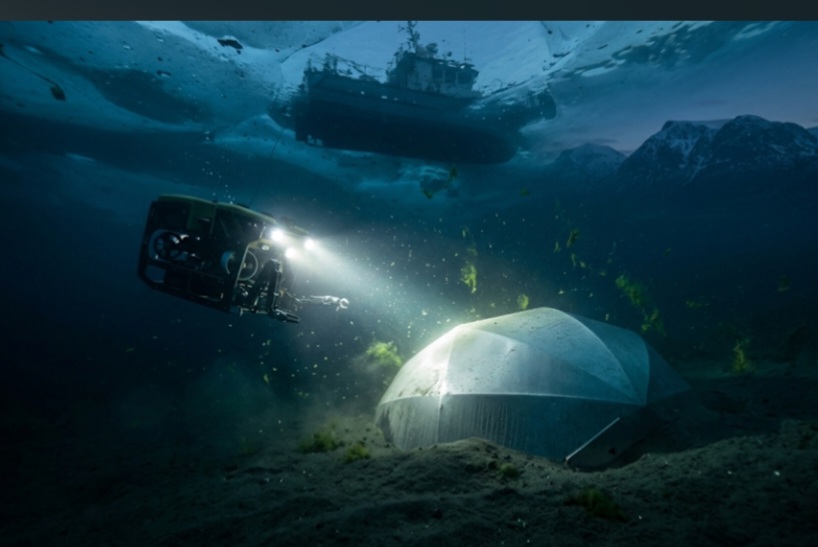
    Submerged deep lake UFO wreckage discovered by sonar technology on the freezing bed of Lake Djupsjøen in Norway.

  • varginha ufo incident, declassification campaign, non-human entities, uap transparency, brazilian military cover-up, classified ufo files

    varginha ufo incident, declassification campaign, non-human entities, uap transparency, brazilian military cover-up, classified ufo files

    The Varginha UFO Incident: Why Lawmakers Launch a Declassification Campaign for Classified UFO Files

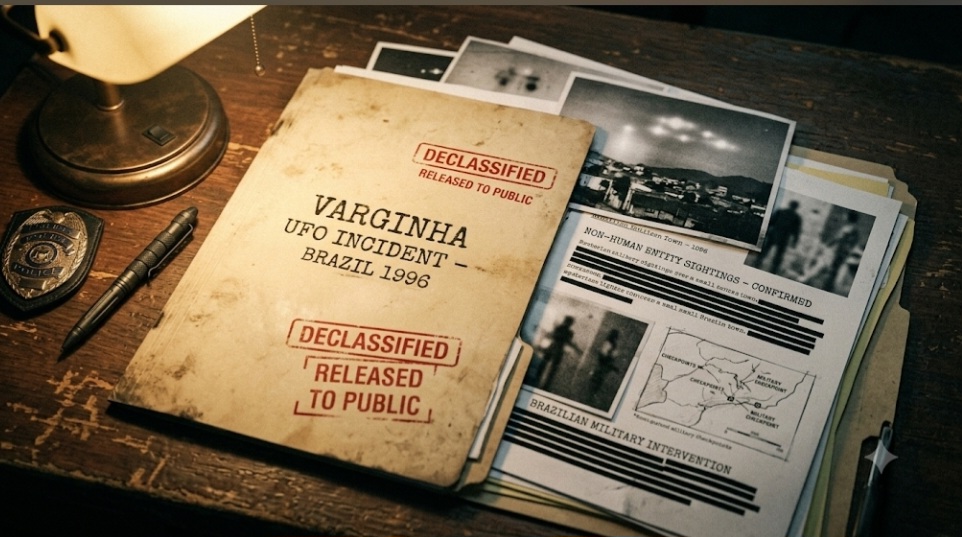
    The global push for uap transparency has reached a critical historical turning point as a renewed legislative effort in Washington forces international anomalies back into the mainstream spotlight. According to a groundbreaking media investigation, U.S. lawmakers and prominent whistleblowers are actively spearheading a coordinated declassification campaign demanding the public release of classified ufo files tied to a decades-old event in South America. The focal point of this intense political scrutiny is the infamous 1996 varginha ufo incident in Brazil—a case widely regarded by international researchers as one of the most compelling and highly witnessed encounters with potential extraterrestrial intelligence in modern history.

    The original events unfolded in January 1996, when multiple residents in the municipality of Varginha reported seeing unusual aerial structures followed by shocking ground encounters. The most striking testimony came from three young women who described a bipedal creature with smooth skin, prominent red eyes, and three distinctive bumps on its oversized skull. Local rumors and subsequent ufological investigations quickly escalated into full-scale allegations of a deep military intervention. Witnesses claimed that local fire departments and army authorities, working in tandem with foreign intelligence agencies, successfully captured live non-human entities and secretly transported them out of the country for advanced anatomical study.

    The Competing Narratives and Claims of a Brazilian Military Cover-up

    Despite the overwhelming amount of civilian testimony and anomalous radar tracks, official government bodies have consistently maintained a rigid narrative of skepticism. An official inquiry conducted by the Brazilian army concluded that the alleged alien creature was simply a local resident with physical disabilities, and that the extensive military deployments in the area were merely routine logistical operations. However, the immense gap between the official military conclusions and the terrifying accounts provided by first-hand witnesses continues to fuel widespread accusations of a systematic brazilian military cover-up.

    The ongoing declassification campaign led by international researchers emphasizes several core demands to settle the historical dispute:

    • Radar Telemetry Access: Providing unredacted tracking data and local aerospace sensor data from January 1996 to map anomalous entry vectors.
    • Transport Manifests: Releasing diplomatic transport logs to verify whether any classified cargo was flown from Brazil to secret U.S. military bases.
    • Medical and Police Records: Declassifying the medical treatment files of a young police officer who tragically died of a sudden, unexplained infection after handling the alleged creature.

    The renewed focus on these foreign files demonstrates that the fight for disclosure transcends domestic airspace boundaries. Activists argue that tracking global anomalies requires an uncompromised, international network of open data. When military entities suppress primary tracking material, it creates systemic blind spots that jeopardize public trust and global aerospace safety.

    As this international battle over the varginha ufo incident intensifies, it highlights a broader geopolitical pattern where institutional defense layers are being systematically challenged by credible whistleblowers. This intense demand for declassifying historical records perfectly mirrors the modern professional movement happening within the aviation sector, where highly trained tactical operators are no longer willing to hide their anomalous experiences. To explore how modern flight crews are breaking traditional boundaries, read our comprehensive feature on Pilots and Astronauts Breaking Silence on Declassified UAP Encounters, showcasing how global disclosure is rapidly transitioning from a localized phenomenon into an undeniable reality.

    Classified military intelligence file dossier on the Varginha UFO incident with official declassification stamps.

  • National Security Risk: US Navy Rejects Further Declassification of Classified UAP Videos

    National Security Risk: US Navy Rejects Further Declassification of Classified UAP Videos

    The Boundary of Defense Intelligence Transparency

    The administrative battleground over government disclosure regarding Unidentified Anomalous Phenomena (UAPs) has hit a significant institutional wall. While recent executive guidelines suggested a broader push toward state-level transparency, official verification logs compiled by the civilian archive The Black Vault confirm that defense command channels are actively limiting the release of new sensor telemetry. Following multiple high-level Freedom of Information Act (FOIA) requests tracking military airspace incursions, the United States Department of the Navy formally stated that it will not authorize any further public access to its internal visual databases.

    The structural denial issued by naval intelligence specialists marks a stark departure from the public optimism surrounding modern declassification efforts. According to the formal text of the rejection notices, the military apparatus acknowledges the existence of extensive unreleased footage, tactical photo arrays, and sophisticated multi-sensor tracking metrics. However, defense officials argue that moving these files into the public domain would provide foreign adversaries with highly critical insight into current electronic warfare protocols.

    Sensors, Capabilities, and the National Security Standard

    The core justification for withholding additional UAP intelligence centers entirely on the technological sensitivity of current defense platforms. Naval authorities clarify that the raw files are captured by frontline assets operating within tightly controlled training sectors and strategic naval corridors. Intelligence units have outlined specific operational parameters that prevent further unsealing of these records:

    • Vulnerability Exposure: Raw video assets can inadvertently reveal the exact detection ranges, tracking speeds, and infrared limits of advanced fighter jet sensor suites.
    • Tactical Triangulation: Unedited telemetry logs allow external military analysts to calculate secret naval maneuvering zones and fleet deployment layouts.
    • Proprietary Codecs: Digital processing methods utilized to stabilize anomalous radar captures remain tied to top-secret defense communications networks.

    As a direct consequence of these strict security assessments, the Department of Defense maintains that even if the observed airborne objects remain classified as “unidentified,” the physical metadata surrounding the encounters is fundamentally tied to national survival protocols. This creates a challenging paradox for independent research organizations, where the scientific data needed to evaluate anomalous flight dynamics is locked away behind the very systems designed to guard federal airspace borders.

    The Conflict Between Scientific Inquiry and State Secrets

    The dynamic interaction between decentralized civilian investigators and the military enterprise highlights a widening gap in the modern UAP discourse. While legislative bodies continue to push for updated reporting frameworks through agencies like the All-domain Anomaly Resolution Office (AARO), the navy’s definitive stance proves that national defense priorities will consistently override public transparency initiatives. This systemic containment strategy limits global engineering groups from cross-referencing multi-spectral files that could help resolve complex physics anomalies.

    The current institutional freeze ensures that civilian-led digital directories remain the primary tool for trackable transparency. Despite intense bureaucratic blockages and aggressive redaction policies that erase vital coordinates from unsealed files, the continuous monitoring of federal archives ensures that authentic encounter patterns are not entirely scanned from history. By focusing heavily on the physical mechanisms of data collection, the research community continues to challenge official defense barriers, proving that the search for definitive answers requires uncovering the raw tracking infrastructure hiding beneath layers of state secrecy.