Autor: juniorhortabh

  • The Outer Space Treaty Was Designed for the Cold War—Researchers Say It Can’t Handle What’s Coming Next

    The Outer Space Treaty Was Designed for the Cold War—Researchers Say It Can’t Handle What’s Coming Next

    Cold War Space Treaty Is Breaking: Who Will Control Near-Earth Orbit?,

    An Ancient Law for a Modern Cosmic Frontier

    The foundation of global space law, which has successfully governed human activities beyond Earth for nearly sixty years, is rapidly approaching a critical breaking point. According to a groundbreaking new analysis, the legal framework crafted during the height of the Cold War is completely unprepared for the impending era of commercial spaceflight and military orbit control.

    Published in the prestigious journal Frontiers in Space Technologies, the study warns that the historic 1967 Outer Space Treaty (OST) faces unprecedented threats. Between rising geopolitical rivalries on Earth and the sudden dominance of private aerospace corporations, the rules of outer space are being rewritten in real-time.

    Astronomers Dr. John Barentine and Dr. Aparna Venkatesan argue that while the treaty was a triumph of its era, it cannot withstand the modern space race. As NASA, the Pentagon, and international adversaries turn their attention to the stars, the potential for unresolved conflict in near-Earth orbit has never been higher.

    Born in the Shadow of the Cold War

    The Outer Space Treaty was forged during one of the most dangerous periods in modern human history. Negotiated primarily by the United States and the Soviet Union, the document established vital boundaries for humanity’s expansion into the cosmos.

    Among its most crucial tenets were strict bans on placing weapons of mass destruction in orbit and the prohibition of national sovereignty claims over celestial bodies. For decades, this historic agreement successfully prevented a catastrophic orbital arms race.

    However, the researchers point out that the treaty was designed for an era when only two superpowers possessed launch capabilities. Today, dozens of nations operate advanced satellites, and private entities are launching rockets at a rate never before imagined, leaving major legal and moral questions unresolved.

    The Threat of Orbital Militarization and Classified Anomalies

    The study highlights a sobering reality: space exploration and military dominance have always been deeply intertwined. From the V-2 rockets of World War II to the launch of Sputnik in 1957, scientific achievements in space have often doubled as military demonstrations.

    In recent years, the militarization of orbit has accelerated dramatically. Global powers like the United States, China, Russia, and India are investing heavily in anti-satellite weapons, advanced missile-defense architectures, and highly classified orbital assets.

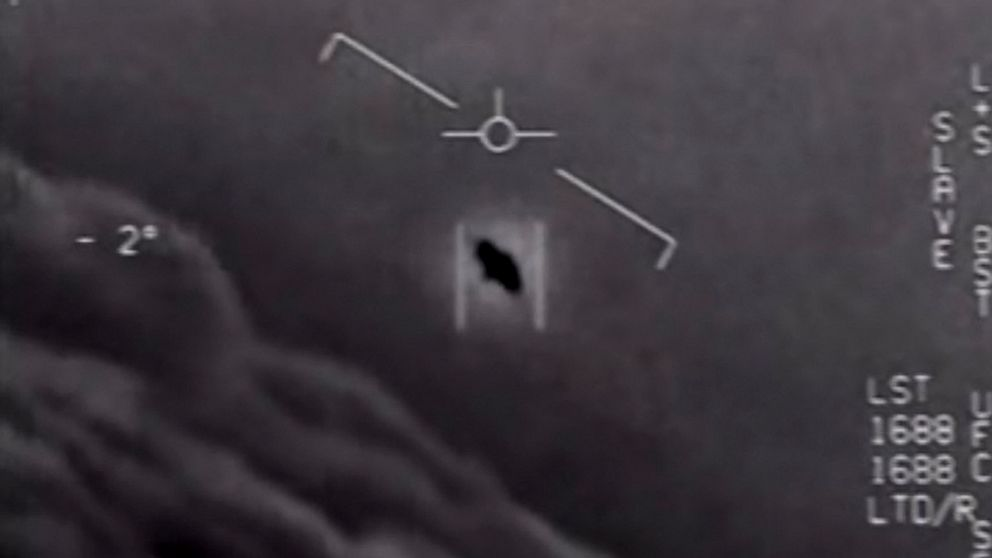
    For organizations monitoring the skies, this surge in military traffic creates a complex web of secrecy. With thousands of new satellites and secret payloads in orbit, distinguishing between classified military tech, space debris, and genuine UAP anomalies has become a daunting challenge for both NASA and independent researchers looking for the next orbital mystery.

    A Looming Lunar Land Grab?

    Perhaps the most urgent warning in the study concerns the Moon, which is quickly becoming a primary geopolitical flashpoint. With multiple nations successfully landing spacecraft on the lunar surface, plans for permanent bases and resource extraction are rapidly moving from science fiction to reality.

    Because the Outer Space Treaty bans sovereignty claims but fails to address resource ownership or “exclusion zones,” the first nations to establish a presence could effectively monopolize the most valuable areas. This loophole risks igniting a dangerous rush for lunar territory, despite the treaty’s cooperative spirit.

    Furthermore, the threat of orbital debris looms large over all space-faring nations. Destructive kinetic actions or satellite collisions in orbit can generate thousands of fragments that persist for decades, threatening spacecraft, scientific missions, and tracking operations worldwide.

    Treating Space as a Protected Environment

    Rather than calling for the complete abandonment of the Outer Space Treaty, the researchers advocate for a profound shift in how we view the cosmos. They suggest drawing inspiration from the global “Rights of Nature” movement, which views ecosystems as having intrinsic rights to exist and thrive.

    By treating near-Earth orbit and celestial bodies as environments deserving of stewardship rather than resources to be exploited, humanity might avoid repeating the ecological mistakes made on Earth. Models of international cooperation, such as the peaceful management of Antarctica, could provide a blueprint for the future.

    “The fundamental challenge lies in defending the space environment from failure of human goodwill and trust,” the authors conclude. As disclosure efforts continue and the mystery of what lies beyond our atmosphere deepens, establishing clear, cooperative rules for the cosmos has never been more vital.

    Image Suggestion: A dramatic, cinematic digital art piece showing the Earth from orbit, surrounded by a dense network of glowing satellites and a futuristic military spacecraft patrolling the edge of space, with the Moon visible in the background under a starry, mysterious cosmos.

     

  • The March 1949 Incursions: Multiple Military Patrols Confirm Interacting Unidentified Lights

    The March 1949 Incursions: Multiple Military Patrols Confirm Interacting Unidentified Lights

    Tactical Sightings in Restricted Airspace

    Declassified military intelligence records from March 1949 reveal a series of highly coordinated aerial violations over tactical zones that deeply challenged the defense capabilities of the United States armed forces. According to detailed observation logs and encounter summaries preserved between pages 95 and 102 of the Sandia official intelligence archive, multiple independent military units deployed on active guard duty simultaneously intercepted a group of unidentified anomalous phenomena (UAPs) operating with absolute impunity inside highly restricted federal sectors.

    The tactical chronologies detailed in these operational files indicate that the events reached a critical peak during the first week of March 1949. Ground observers stationed across defense lines reported a formation of structured lights moving in unusual patterns. The group consisted of three brilliant amber-yellow lights and one distinct red light flying in a tightly synchronized formation. According to the defensive radar tracking summaries and physical coordinate logs found specifically on page 97, these objects did not follow any known ballistic trajectory, commercial flight plan, or meteorological pattern, immediately triggering a high-level security alert across the entire installation command.

    Synchronized Military Eye-Witness Testimony

    Unlike isolated civilian accounts that dominated early ufology archives, this specific defense emergency was documented by trained, on-duty military specialists. Security logs found on pages 98 and 99 confirm that a tactical unit patrolling “Area Q”—a zone dedicated to sensitive military projects—and a specialized four-man alert squad stationed permanently on the high-altitude Greenville Mountain ridge confirmed seeing the exact same phenomena at the exact same moments. The soldiers described the anomalous lights not merely as drifting elements, but as objects performing intelligent, interacting maneuvers, including sudden stops, rapid acceleration pulses, and sharp angular turns that defy conventional aerodynamic capabilities.

    The field reports written by the commanding officers on the ground emphasize that weather conditions during the nights of March 6, 7, and 8 were completely clear, with excellent visibility and minimal wind interference. As noted in the official weather calibration charts attached to the final section of the file on pages 105 and 106, this data effectively ruled out thermal inversions, cloud reflections, or standard atmospheric anomalies. The four soldiers from the Greenville Mountain alert post provided individual, matching descriptions of the red object separating from the amber cluster, performing a low-altitude sweep near the military perimeter fence line, and then instantly climbing vertically until it disappeared into the upper atmosphere.

    The Failure of Conventional Explanations

    Immediately following these synchronized observations, intelligence officers from the Office of Special Investigations (OSI) and ground security elements launched a rigorous investigation to locate any physical trace of conventional operations in the area. Ground sweeps, civilian airport cross-checks, and commercial logistics reviews were conducted across the region. However, as the consolidated investigation report on page 101 strictly details, authorities failed to discover any record of private aviation, unauthorized military exercises, experimental weather balloon launches, or pyrotechnic testing that could account for the lights.

    The sheer precision of the simultaneous sightings by geographically separated military patrols eliminated the possibility of optical illusions or localized hallucinations. Military specialists noted that the silent operation of the craft—which produced no audible propulsion sound or sonic booms despite moving at seemingly hypersonic velocities—indicated a technological paradigm completely detached from the known aviation engineering of the late 1940s. The documents prove that the intelligence wing was dealing with real, physical intrusions that easily bypassed the active defensive barriers established to protect national security assets.

    Systemic Archives and the Modern UAP Puzzle

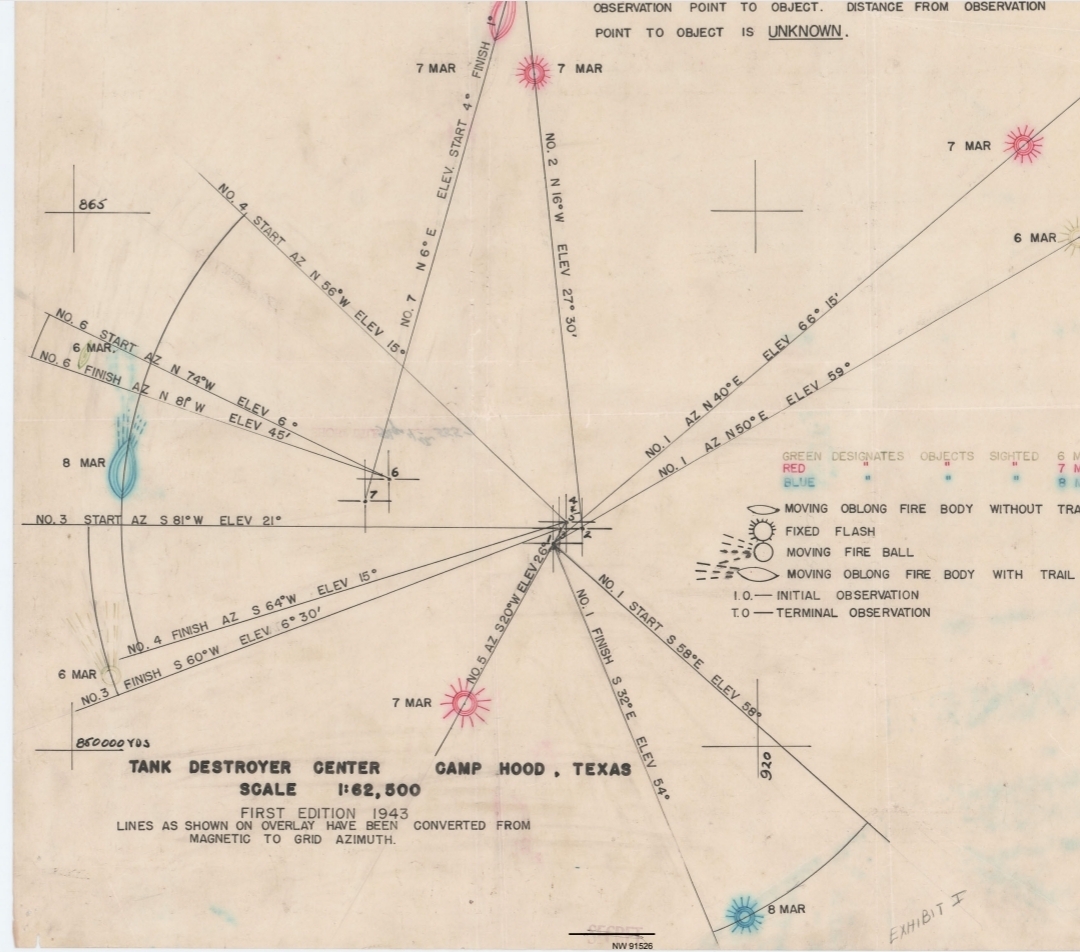
    The historical significance of the March 1949 incursions lies in the systemic approach the military used to catalogue these events. The final pages of the declassified dossier, specifically pages 107 through 109, contain original hand-drawn tactical maps, triangulation charts, and ray-line graphs indicating the exact angles of observation from Camp Hood, Texas, to the central operational grid of the objects. These visual assets illustrate that defense agencies were treating UAPs as a highly serious tracking problem, using scientific methods to analyze altitude, speed, and behavior patterns decades before the modern implementation of digital sensor networks.

    These archival records show that the core questions surrounding unidentified anomalous phenomena have remained unchanged for generations. The detailed observations of interacting lights over tactical perimeters in 1949 perfectly parallel modern military encounters reported by naval aviators and tracked by the Pentagon’s All-domain Anomaly Resolution Office (AARO) today. By providing readers with the exact page numbers and technical criteria used by researchers in 1949, this documentation bridges the gap between historical secrecy and modern disclosure, offering undeniable evidence that our skies have been shared with unknown technologies for much longer than officially acknowledged.

  • Sensitive Nuclear Sites Under Watch: The 18-Month UAP Incursion Over Los Alamos and Sandia Base

    Sensitive Nuclear Sites Under Watch: The 18-Month UAP Incursion Over Los Alamos and Sandia Base

    The Threat to National Security

    Official military correspondence from 1949 and 1950 highlights a prolonged series of airspace violations over some of the United States’ most critical nuclear installations, including Los Alamos and the Sandia Base in New Mexico. According to wartime records preserved between pages 22 and 28 of the declassified dossier, unidentified anomalous phenomena (UAPs)—specifically described as persistent green fireballs and anomalous blinding lights—maneuvered through restricted airspace continuously for over 18 months, baffling early radar operators and intelligence wings.

    The frequency and precise trajectory of these sightings over atomic storage areas triggered immediate alerts across multiple government branches. As detailed in the security logs found between pages 1 and 5 of the document, the military was forced to immediately amend guard orders, lock down strategic access gates, and deploy tactical jeep radios to establish a decentralized perimeter network capable of tracking these high-speed anomalous objects in real-time.

    Secret High-Level Conferences

    The gravity of the situation led to emergency secret conferences involving top-tier defense organizations. Memorandums found on pages 11, 12, and 15 confirm joint briefings between the Federal Bureau of Investigation (FBI), the Atomic Energy Commission (AEC), the U.S. Air Force, and the Armed Forces Special Weapons Project to assess the potential threat of foreign espionage or unknown technologies.

    Military commanders were deeply alarmed by the objects’ apparent interest in nuclear stockpiles and research facilities. While defense scientists scrambled to find a conventional explanation, the consensus among intelligence officers was clear: the unauthorized presence of these objects represented an unresolved threat to national security. These archival records prove that the puzzle sharing our skies is a deeply entrenched challenge that defense agencies have been fighting to understand since the dawn of the nuclear age.

  • Mysterious signals keep coming from space: Astronomers find their ‘Rosetta stone’

    Mysterious signals keep coming from space: Astronomers find their ‘Rosetta stone’


     Mysterious Deep Space Signals: Astronomers Decode New Cosmic Anomaly, 

    A New Era in the Search for Cosmic Answers

    For decades, the cosmos has teased humanity with fleeting whispers. Mysterious radio signals, flashing from the deepest corners of the universe, have long fueled speculation about extraterrestrial intelligence and advanced alien civilizations.

    Now, scientists believe they have stumbled upon a celestial “Rosetta stone.” This breakthrough discovery could finally explain one of the most baffling anomalies in modern astrophysics.

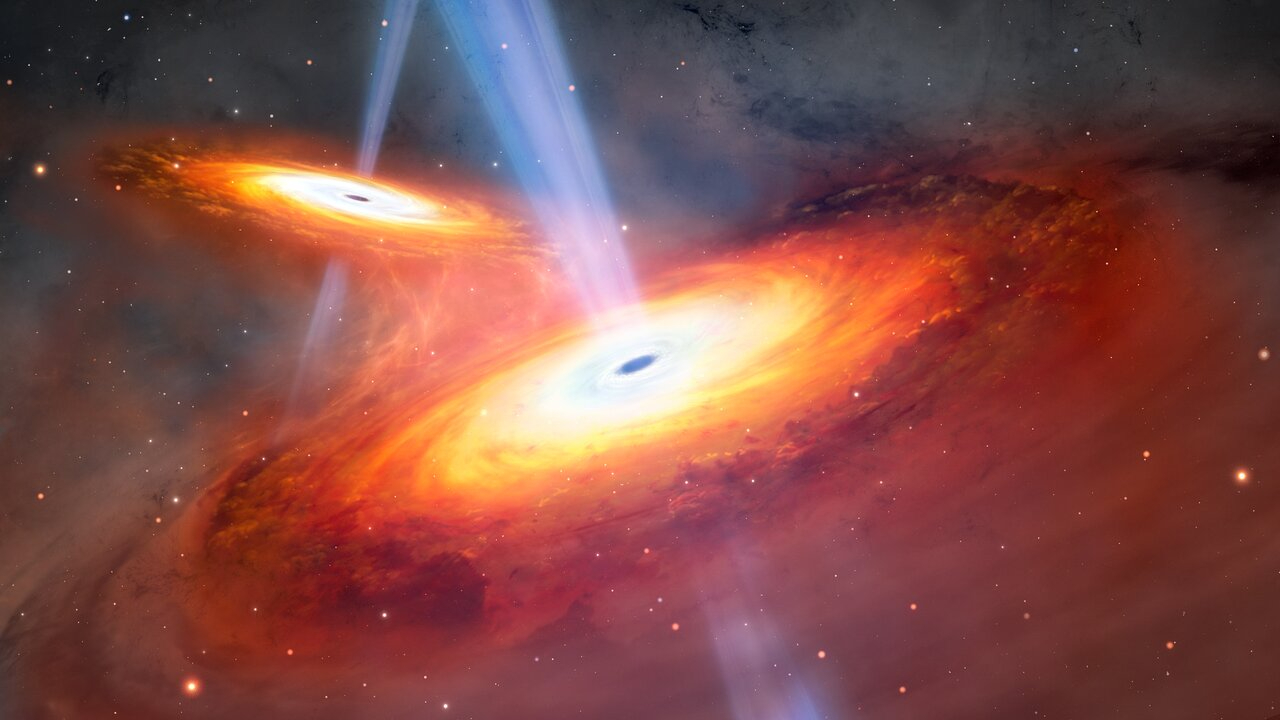
    Astronomers have traced a persistent, repeating radio signal back to its source. The culprit behind this fascinating transmission is a highly unusual pair of stars locked in a cosmic dance, spiraling around each other in deep space.

    Unveiling ASKAP J1745: The Source of the Signal

    The newly identified cosmic transmitter, designated as ASKAP J1745, was detected using cutting-edge radio telescope arrays. Unlike one-off fast radio bursts (FRBs) that vanish in milliseconds, this anomaly continues to pulse with strange regularity.

    This repeating pattern immediately caught the attention of researchers worldwide. For UAP (Unidentified Aerial Phenomena) enthusiasts and mainstream astronomers alike, highly structured signals from deep space always raise the ultimate question: is it a natural phenomenon, or something more?

    The discovery of ASKAP J1745 provides a definitive, albeit astonishing, scientific answer. It offers a rare glimpse into the extreme physics operating in the far reaches of our galaxy.

    The Deadly Spiral of Two Star Companions

    At the heart of this deep-space anomaly lies a binary star system. Two massive stars are locked in a tight gravitational embrace, spiraling closer and closer to one another.

    As these celestial bodies orbit at breakneck speeds, their intense magnetic fields and solar winds collide. This violent interaction acts as a massive cosmic generator, blasting intense beams of radio waves across the universe.

    This mechanical-like regularity is what made the signal appear so artificial at first. The spiraling motion creates a lighthouse effect, sweeping across Earth’s path at predictable intervals and mimicking the patterns of a deliberate beacon.

    Why This Discovery Matters for the UAP and SETI Communities

    For those tracking UAP sightings and searching for signs of advanced technology (SETI), this discovery is a double-edged sword. While it explains away one cosmic mystery as a natural occurrence, it provides crucial data for future searches.

    By understanding what a natural, highly structured cosmic signal looks like, scientists can better calibrate their search for true technosignatures. Agencies like NASA and various military disclosure initiatives rely heavily on filtering out this cosmic “static” to identify genuine anomalies.

    If we are to ever detect a signal from an intelligent extraterrestrial source, we must first master the language of the stars. ASKAP J1745 represents a major leap forward in that exact mission.

    The Ongoing Quest to Decode the Universe

    Despite this breakthrough, many questions remain unanswered. How many of the thousands of unexplained signals detected by NASA and international observatories each year are actually binary stars, and how many remain truly anomalous?

    As radio astronomy technology advances, our ability to peer into the dark improves. Every decoded signal brings us one step closer to understanding the grand design of the cosmos.

    Whether these discoveries point to natural wonders or pave the way for future contact, one thing is certain: the universe is far from silent.

    Are We Closer to Disclosure?

    The study of deep-space anomalies often intersects with the ongoing push for government and military disclosure regarding UAPs. By analyzing these extreme outer space phenomena, researchers gain a clearer picture of what is possible within the laws of physics.

    As we continue to monitor the heavens, the line between science fiction and scientific reality grows thinner. The “Rosetta stone” of ASKAP J1745 may just be the beginning of a much larger cosmic revelation.

  • Real-Time UFO Tracking: The Digital Feeds Changing UAP Science

    Real-Time UFO Tracking: The Digital Feeds Changing UAP Science


    The New Era of Live UAP Tracking

    For decades, keeping track of mysterious sky anomalies was a slow, frustrating game of waiting for official government reports. Today, a digital revolution is quietly taking place, allowing citizen scientists to monitor UFO and UAP activity in real-time.

    Using advanced satellite tracking, open-source data feeds, and instant notification systems, researchers are no longer dependent on declassified documents. Instead, live digital networks are mapping the skies, flagging unusual movements as they happen.

    Crowdsourcing the Search for Anomalies

    The concept of a real-time feed for tracking anomalous phenomena has transformed from a sci-fi dream into a concrete tool. Tech-savvy civilian groups are now utilizing complex database feeds to aggregate global sightings instantly.

    These specialized platforms operate much like high-tech news feeds, constantly updating with radar anomalies, military airspace reports, and satellite imagery. When an unexplained object crosses the sky, notifications are sent to researchers worldwide within seconds.

    This decentralized approach has forced agencies like NASA and the Pentagon to take public data collection more seriously. The sheer volume of instantly shared digital evidence makes unexplained aerial anomalies harder to dismiss.

    Why Real-Time Data is Changing Everything

    In the past, the main obstacle to solving the UFO mystery was the lack of verifiable, immediate data. By the time a witness reported an encounter, the object was long gone, leaving behind only subjective memories.

    Now, live feeds allow multiple observers to cross-reference a single event using different sensors simultaneously. If a strange light appears in Europe, automated tracking systems can immediately check flight paths, weather balloons, and satellite orbits.

    This systematic filtering process separates known objects from genuine, unexplained UAPs in a matter of minutes. It represents a massive leap forward in scientific accountability and rigor.

    The Future of Sky Monitoring

    As AI-powered tracking tools and public databases continue to evolve, the curtain of secrecy surrounding sky anomalies is wearing thin. The next major UAP discovery might not come from a classified military briefing, but from a public alert system.

    With global communities connected through these high-speed digital networks, the skies have never been watched so closely. The ultimate truth behind these mysteries might finally be just a click away.

    2

  • Could the Milky Way’s missing mass be hiding in a swarm of interstellar comets?

    Could the Milky Way’s missing mass be hiding in a swarm of interstellar comets?


    [Cosmic Anomaly: Are Interstellar Visitors Hiding Galactic Mass?,

    A New Cosmic Mystery in Our Galactic Backyard

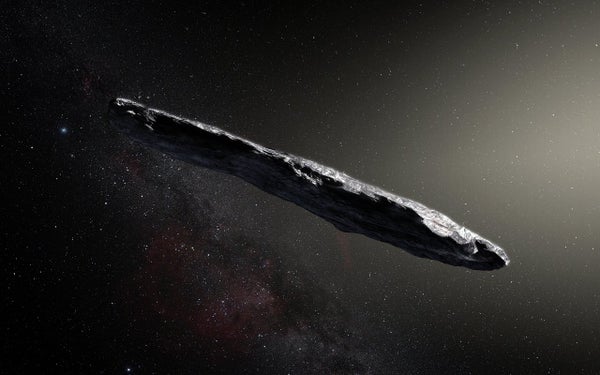
    The universe has a way of keeping us on our toes. The recent discovery of 3I/ATLAS, the third confirmed interstellar visitor to enter our solar system, is forcing astronomers to rethink everything we know about deep space anomalies.

    But this interstellar object (ISO) isn’t just a wandering space rock. According to a groundbreaking new study, a vast, undetected swarm of these cosmic travelers could solve one of the greatest mysteries in modern astrophysics: the search for dark matter.

    Rewriting the Laws of Dark Matter

    For decades, researchers at agencies like NASA and scientific institutions worldwide have struggled to explain the “missing mass” of the Milky Way. We know something invisible is holding our galaxy together, traditionally labeled as dark matter.

    However, a new preprint paper from researchers at the University of Hamburg suggests a wild alternative. What if the missing mass isn’t some exotic, undiscovered particle, but rather trillions of rogue interstellar comets and debris drifting through the void?

    By calculating the potential density of these interstellar objects, the team investigated how a massive population of ISOs would impact our galactic weight calculations. The implications are staggering, suggesting that the dark void of space is far more crowded than we ever imagined.

    From Deep Space Anomalies to Earth’s Skies

    This discovery bridges the gap between astrophysics and the ongoing hunt for unexplained phenomena. While the Pentagon and UAP tracking initiatives focus on anomalous objects closer to Earth, deep-space discoveries like 3I/ATLAS remind us that the outer cosmos is teeming with uncharted intruders.

    Each new interstellar detection brings us closer to a grand disclosure of how planetary systems form, migrate, and shed material into the interstellar medium. If these objects are indeed masking the galaxy’s missing mass, we are looking at a paradigm shift.

    Are we on the verge of solving the dark matter anomaly? As telescope technology advances, the line between science fiction and cosmic reality continues to blur, leaving us to wonder what else is hiding in the dark.

    2

  • TRAPPIST-1 Mystery: Forecasting Weather on Alien Earths

    TRAPPIST-1 Mystery: Forecasting Weather on Alien Earths

    The Search for lien Life in TRAPPIST-1

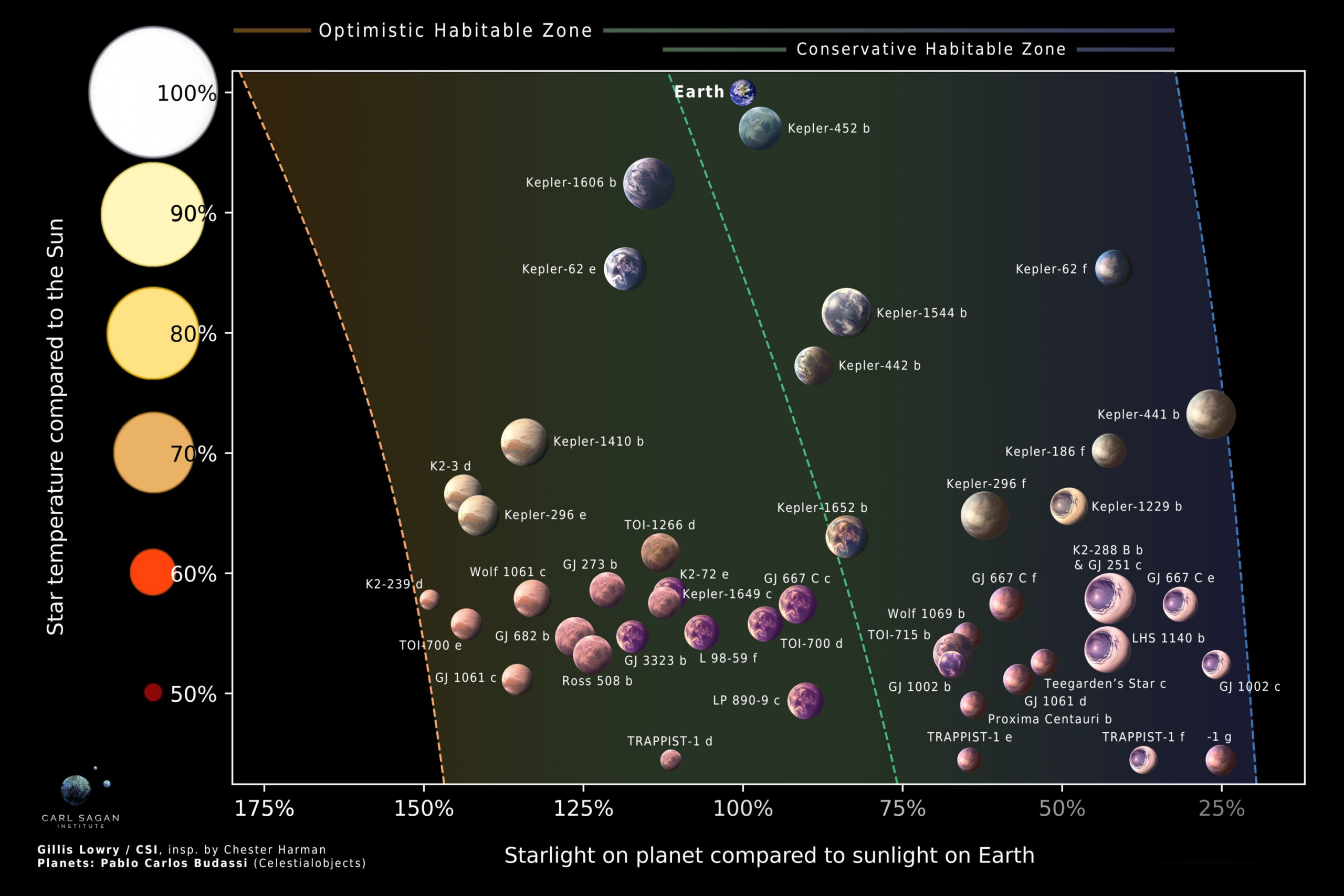
    For years, astronomers and space enthusiasts have pointed their telescopes toward the TRAPPIST-1 system. Located just 41 light-years from Earth, this unique stellar neighborhood features seven Earth-sized planets orbiting a dim red dwarf star, creating a massive point of interest for those tracking potential cosmic anomalies.

    Among these seven worlds, TRAPPIST-1e and TRAPPIST-1f stand out as the prime candidates for hosting liquid water. Both reside squarely within the star’s habitable zone, sparking intense scientific curiosity and debate about what—or who—might exist on their surfaces.

    The Mystery of the Twilight Terminator

    However, these potential alien worlds are unlike anything we experience in our own solar system. Because they orbit so close to their host M-dwarf star, scientists believe these planets are tidally locked.

    This means one side of the planet permanently faces the searing heat of the star, while the other is trapped in perpetual, freezing darkness. Between these two extreme environments lies a thin, mysterious band known as the twilight terminator, where temperatures could be mild enough to sustain life.

    Could an advanced civilization thrive in this eternal twilight? Researchers are now utilizing cutting-edge computer models to simulate the atmospheric conditions of these unique exoplanets, aiming to solve this profound cosmic mystery.

    Forecasting Alien Weather: A Scientific Breakthrough

    To understand if these worlds are truly habitable, scientists have developed a revolutionary, faster way to forecast alien weather. This breakthrough allows researchers to predict climate patterns and atmospheric circulation on distant worlds with unprecedented speed and accuracy.

    By mapping these alien weather systems, astronomers can better identify potential biosignatures. This search for signs of life closely aligns with the growing global interest in UAP disclosure and NASA’s ongoing mission to find habitable exoplanets in the deep cosmos.

    As telescope technology continues to advance, we are closer than ever to uncovering whether these distant worlds hold the ultimate secret. The atmospheric data from TRAPPIST-1 might soon reveal if we are truly alone in the universe, or if our cosmic neighbors are closer than we think.

    2

  • Scientists Decode ‘Alien Weather’ on Nearby Habitable Worlds

    Scientists Decode ‘Alien Weather’ on Nearby Habitable Worlds

    A Breakthrough in the Search for Extraterrestrial Clim

    For years, astronomers and NASA researchers have turned their telescopes toward the TRAPPIST-1 system. Located just 41 light-years from Earth, this nearby cosmic neighborhood remains one of the most promising locations for finding a real space anomaly or signs of habitable environments.

    Now, astrophysicists have developed a faster way to forecast “alien weather” on these distant exoplanets. This breakthrough could revolutionize how we analyze atmospheric data, bringing us closer than ever to uncovering the secrets of alien worlds.

    The Mystery of the TRAPPIST-1 Habitable Zone

    The TRAPPIST-1 system features seven Earth-sized planets orbiting a dim, red M-dwarf star. Among these, planets TRAPPIST-1e and TRAPPIST-1f sit directly within the star’s coveted habitable zone, making them primary targets for astrobiology research.

    However, these worlds harbor a major climate mystery. Because they orbit so close to their host star, scientists believe both planets are tidally locked, meaning they do not rotate relative to their sun.

    This celestial phenomenon results in a permanent day side and a permanent night side. Between these two extreme halves lies a thin, everlasting twilight band known as the “terminator zone,” where life could theoretically survive.

    Predicting Weather on Tidally Locked Worlds

    This extreme climate setup creates complex atmospheric currents that were previously incredibly difficult and time-consuming to simulate. The new forecasting method allows researchers to model these alien atmospheres in a fraction of the time, bypassing traditional computational bottlenecks.

    By understanding how winds and heat circulate on TRAPPIST-1e and -1f, scientists can better identify potential biosignatures. If an atmosphere is stable enough to distribute heat from the day side to the night side, it increases the chances of liquid water persisting on the surface.

    As advanced observatories continue their sweep of the cosmos, decoding these weather patterns is a critical step forward. This scientific leap brings us closer to answering the ultimate question: are we truly alone, or is life waiting to be discovered just 41 light-years away?

    2

  • The Pentagon’s UAP Button: Tracking UFOs in the Digital Age

    The Pentagon’s UAP Button: Tracking UFOs in the Digital Age

    The Search for Answers Goes Digital

    For decades, the study of unidentified anomalous phenomena (UAPs) was relegated to the fringes of science. Today, the conversation has shifted directly into the halls of government power, sparked by a quiet digital revolution.

    The Pentagon’s All-domain Anomaly Resolution Office (AARO) recently launched a dedicated online reporting mechanism. This official UAP button allows current and former government personnel to report firsthand encounters with unexplained craft.

    This new system aims to centralize reports of anomalous behavior that defy our current understanding of physics. The tool serves as a modern archive for tracking phenomena across space, air, and sea.

    A Portal into the Unknown

    This initiative represents a massive leap forward in government transparency. For the first time, witnesses have a direct pipeline to log observations of high-speed maneuvers and strange transmedium travel.

    Historically, military pilots and radar operators feared professional ruin if they spoke out about a UFO sighting. By offering a secure, officially sanctioned channel, the Pentagon hopes to destigmatize these mysterious encounters.

    The influx of data could finally provide the missing pieces to puzzles that have baffled researchers for generations. Each report is carefully digitized, analyzed, and categorized to detect patterns in global airspace.

    Analyzing the Anomalous Data Stream

    But what happens to these reports once the submission button is pressed? Skeptics and ufologists alike are watching closely as scientists sift through hundreds of military logs.

    While many sightings are quickly identified as weather balloons or advanced commercial drones, a small percentage remain entirely unexplained. These are the genuine mysteries that keep both NASA advisers and intelligence officials searching for answers.

    Could these lingering anomalies represent next-generation foreign technology, or something truly out of this world?

    The Public’s Quest for Disclosure

    Currently, this secure reporting tool is restricted to military and government insiders. However, plans for a public-facing portal are highly anticipated by the global ufology community.

    Access to a verified public archive of UAP sightings could revolutionize our understanding of the skies. As the digital age of tracking advances, every report brings us closer to solving the ultimate cosmic mystery.

    2

  • Mysterious Repeating Radio Signals From Deep Space Defy Explanation

    Mysterious Repeating Radio Signals From Deep Space Defy Explanation

    An Unexplained Cosmic Beat

    Astronomers tracking cosmic anomalies have intercepted a series of highly unusual, repeating radio signals from a distant galaxy. These pulses, known as Fast Radio Bursts (FRBs), are defying traditional astrophysical explanations and sparking intense curiosity worldwide.

    While space is filled with natural cosmic noise, the mathematical precision of these specific signals has led researchers to look closer. Operating like an automated cosmic beacon, the source continues to pulse with a rhythm that seems almost artificial.

    Deciphering the Cosmic Signal

    First discovered in 2007, FRBs are incredibly powerful flashes of radio light that last only milliseconds. Yet, in that fraction of a second, they release as much energy as our Sun does in an entire day.

    What makes this latest discovery so compelling is its repeating nature, flashing on a strict, predictable schedule. This periodic behavior has forced scientists to reconsider what kind of celestial object could generate such precise, recurring bursts of energy.

    Could It Be Alien Technology?

    For decades, researchers at organizations like NASA and various SETI institutes have scanned the skies for anomalous signatures. While most astrophysicists favor natural explanations, such as highly magnetized neutron stars, the sheer consistency of these transmissions keeps the question of extraterrestrial technology open.

    Some theoretical physicists have proposed that these bursts could be the signature of massive power sources used to propel giant light sails across interstellar space. Without definitive proof, the phenomenon remains one of the greatest unsolved mysteries of modern astronomy.

    The Search for Answers Accelerates

    As detection technology improves, global observatories are capturing these signals in real-time, allowing for unprecedented analysis. Every new data point adds another piece to the puzzle, bringing us closer to understanding whether we are witnessing a rare stellar event or something far more profound.

    The hunt for the origin of these deep-space anomalies continues to captivate both mainstream scientists and UAP researchers alike. Until we decode the message, we can only look to the stars and wonder what—or who—is broadcasting across the cosmos.

    2